Steep streets of corrala tenements with wooden and glazed galleries, and the corner streets Dark Fate dressed as Mexico City.
What Lavapiés looks like
Steep streets converge on from every side, narrow enough on that parked cars and the roadway share the same width. Tenement blocks climb three to five storeys along the slope, faced in painted render with iron balconies and small wrought iron rails at the windows.
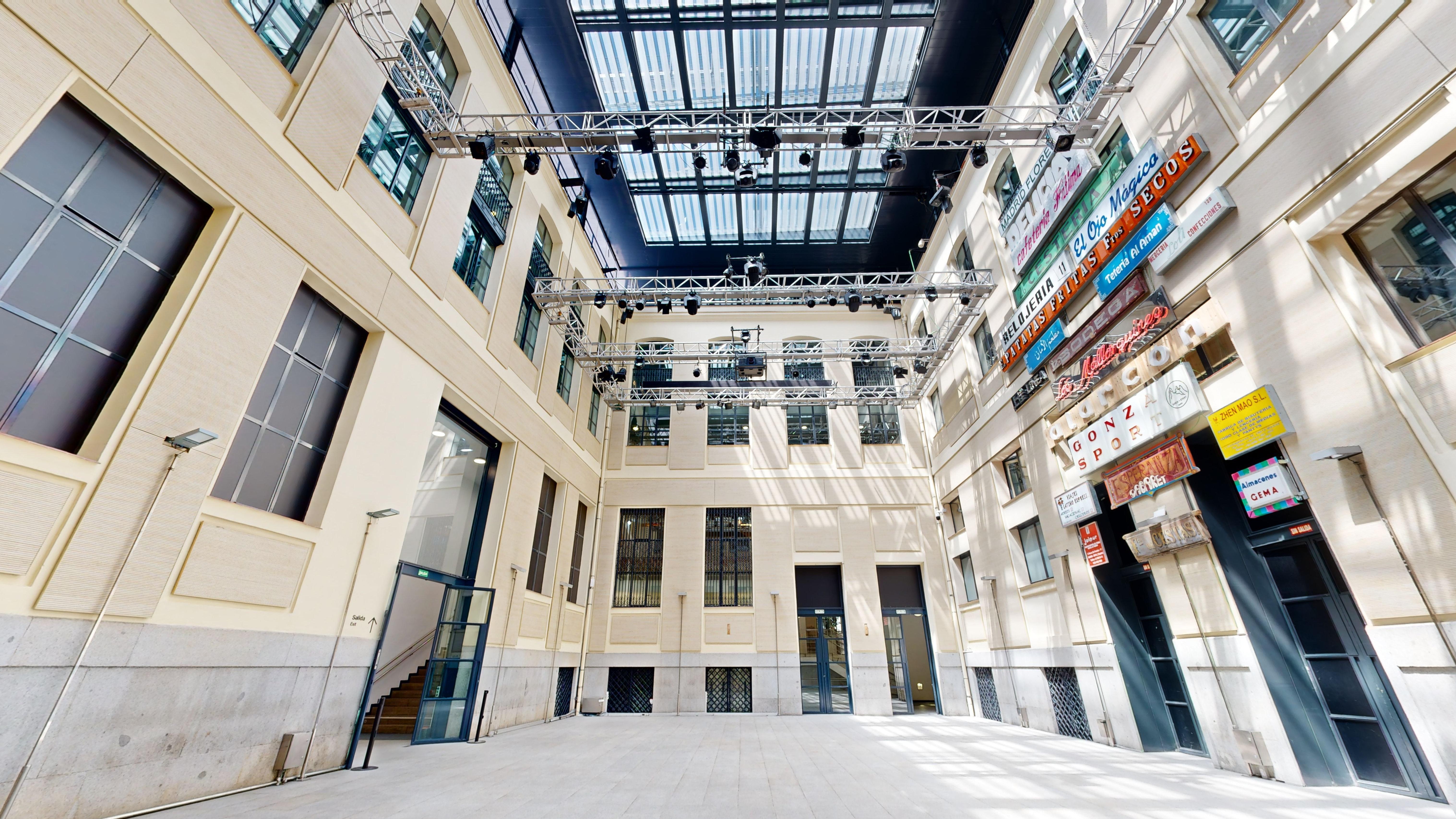
The corrala is the building type most associated with the quarter, a tenement raised mostly in wood between the seventeenth and nineteenth centuries. Its dwellings open onto shared corridors and balconies that ring a central courtyard. stands on the corner of Calle de Tribulete and Calle de Sombrerete. It is the type's surviving example, a timber framed structure built in 1872, its two tiers of balconies wrapped around the courtyard. On newer blocks nearby the same idea reappears with the access galleries closed in glass rather than left open to the weather. This glazed version runs the width of the rear facade, above the ground floor shops.
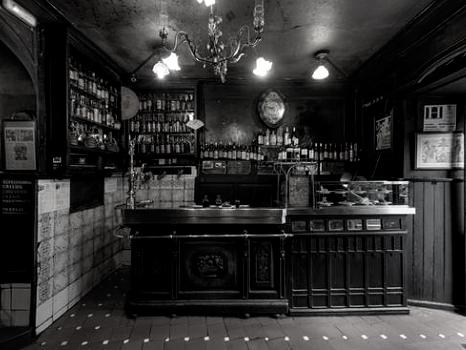
drops downhill in the same narrow, glazed gallery pattern, its ground floors given over to small shops behind roll down shutters. runs along the quarter's western edge, wider and more level, with the same tenements over shopfronts. Inside the on Calle de Embajadores, the market's old butcher and grocery stalls are let out individually now, one of them fitted out as a secondhand bookshop with its shelves built into the original tiled counter.
Shot in Lavapiés
For Dark Fate, the production dressed three streets near Plaza de Lavapiés to stand in for Mexico City. Calle de Valencia was the main block; two more nearby, Calle de Santa Isabel and Calle de la Sombrerería, were dressed the same way. Shopfronts were repainted and relabelled over three days in June 2018, and cars along the streets were repainted to look like Mexican taxis.
Terminator: Dark Fate, 2019
Played a city street, Mexico City, present day
Shopfront signs along this block were repainted and relabelled to look like a street in Mexico City. The two neighbouring streets, Calle de Santa Isabel and Calle de la Sombrerería, were dressed the same way. Cars parked along the kerb were repainted to look like Mexican taxis, over a three day shoot in June 2018. Street View
What Lavapiés can double for
Quartieri Spagnoli in Naples, Italy
Quartieri Spagnoli climbs the hill above Via Toledo on the same kind of steep, narrow grid, with balconied tenement blocks pressing close on both sides of the street. Ground floor shops and bars open directly onto the roadway the way they do on Calle del Calvario. Naples' buildings typically run six or seven storeys against Lavapiés' three to five, so wider shots need a lower angle to keep the extra height out of frame. Try searching steep narrow grid streets now.
Mouraria in Lisbon, Portugal
Mouraria climbs the same steep, narrow street pattern away from a market square, with three and four storey tenements close enough to shade the roadway. Small grocers and repair shops fill the ground floors the same way they do around Plaza de Lavapiés. Lisbon's tiled facades and yellow trams give the neighbourhood away in a wide shot, so tighter frames on the render and ironwork read better as Lavapiés' own streets. Try searching steep narrow street pattern now.
Balat's lanes climb a hillside of close packed three and four storey houses in the same tight grid as the blocks above Plaza de Lavapiés. Laundry lines and small corner shops break up the facades at a similar scale. Balat's houses are painted in bright individual colours rather than Lavapiés' plain render, so a shoot would need to repaint or select a muted block to hold the match. Try searching close packed hillside houses now.