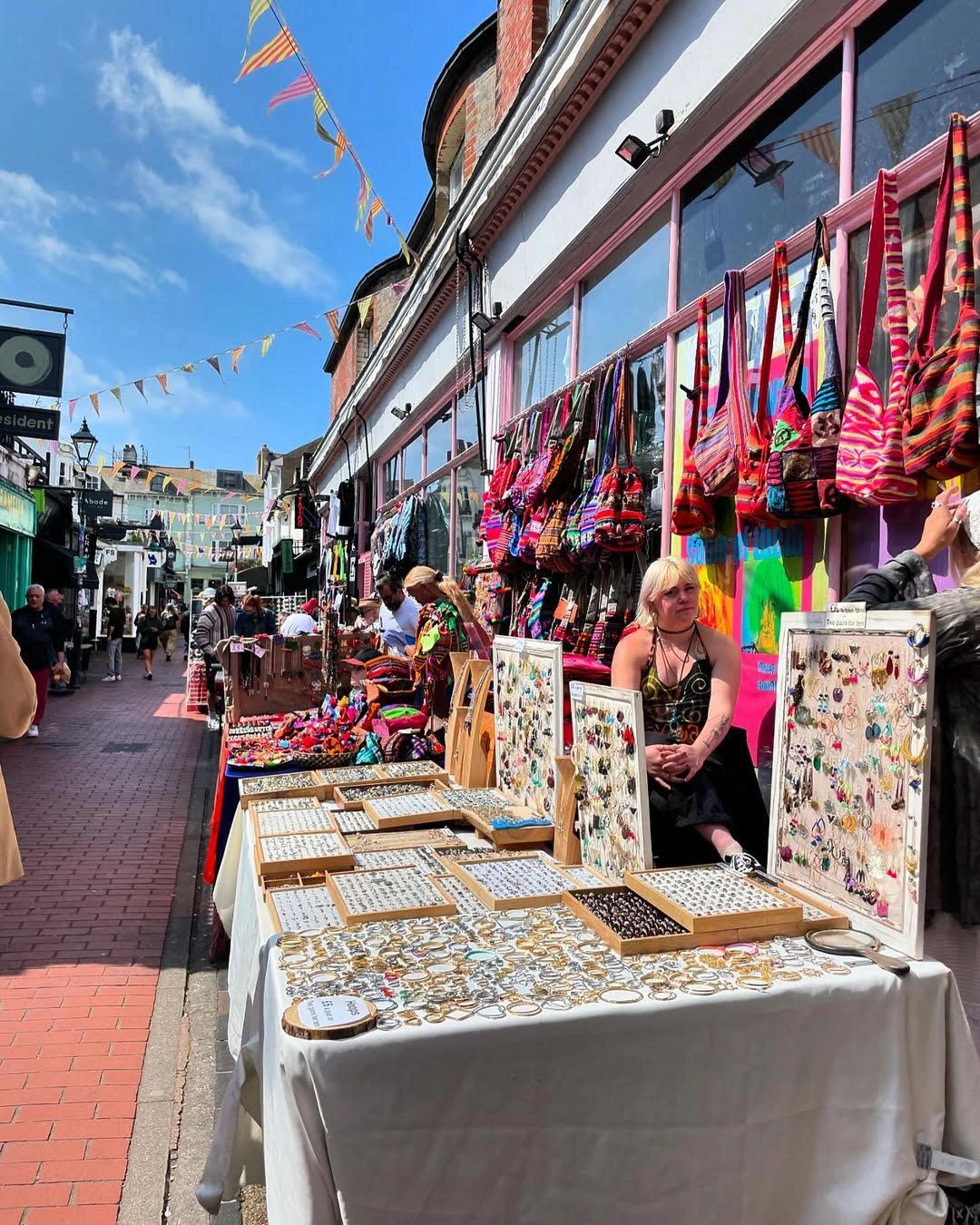
Narrow cobbled lanes closed to cars run between flint and brick shopfronts with bow windows and hanging pub signs.
What The Lanes looks like
Narrow alleys run between the shops here, paved in cobbles and too tight for a car down most of their length. Shopfronts crowd right up to the walkway, many with bow windows bulging over the cobbles and pub signs hanging low enough to duck under.
Fronts along mix brick faced in mathematical tiles with stuccoed houses and the occasional run of flint and tarred brick. Most of the shopfronts date from the late eighteenth to the nineteenth century, set over a street plan from the sixteenth and seventeenth centuries.
and Ship Street thread through the middle of the district, narrow enough that upper floors nearly meet overhead. They widen briefly in a couple of places into small squares, among them Brighton Square. looks the part but is a 1979 rebuild off Duke Street, its uniform shopfronts newer than anything around it. A couple of covered arcades cut through between lanes, roofed in glass over black and white tiled floors.
Jewellers and antique dealers fill most of the ground floor shopfronts, their window displays visible from the cobbles. A handful of pubs break up the run of shops, hanging signs on iron brackets projecting out over the lane.
Shot in The Lanes
Quadrophenia used the passage beside 11 East Street for the scene where Jimmy and Steph slip away from a police chase. It is signed today as , with a blue plaque unveiled in 2023 marking the spot. Brighton Rock sent Fred Hale running through these same lanes decades earlier, the chase ending near Meeting House Lane. The ITV series Grace has shot here more recently, with a scene at the Cricketers pub on Black Lion Street.
Quadrophenia, 1979
Quadrophenia Alley
Jimmy and Steph duck into the narrow passage beside 11 East Street to escape a police chase, then pause there together. The alley has since been signed Quadrophenia Alley, with fan graffiti covering its walls and a blue plaque marking the spot. Street View
Mermaid Street is brick, flint and timber at close to the same scale as here, with the same trade in antiques and jewellery filling the ground floors. Rye sits twenty five miles along the coast, close enough for one crew to work both towns in a day. A level, brick fronted stretch stands in better than a hillier view, since heavy timber framing gives Rye away. Try searching brick flint and timber now.
Elm Hill is the same kind of tight, cobbled lane filled with antique and craft shops, closed to cars down its whole length. Both lanes keep their upper floors close enough together that a camera looking down either one loses the modern street outside the frame. Elm Hill is timber framed with no later shopfronts at all, so Brighton's brick and bow windows would need to stay just out of shot to hold a Tudor read. Try searching cobbled lane closed to cars now.
Keere Street in Lewes, East Sussex
Keere Street is built from the same brick and flint, in the same decades, along a narrow cobbled lane eight miles up the coast from here. The old town wall runs beside it, giving it a quieter, more residential read than the shopping lanes here. Keere Street has almost no shopfronts of its own, so it only works as a side lane or a doorway shot, never as the parade of small shops that defines the area here. Try searching brick and flint lane now.