A castellated Victorian clubhouse and a narrow harbour quay lined with yacht club balconies and chandlers.
What Cowes looks like
Cowes Castle stands on the Parade in limestone ashlar, its battlements rising two to three storeys around a round tower and a gabled roofline. Anthony Salvin's remodel of the Tudor fort, carried out between 1856 and 1858, added the west tower and a platform in front of the keep. A mansard roof and a northern wing followed in the 1920s, and a pavilion shaped like an orangery sits on the lawn in front, added in 2000.
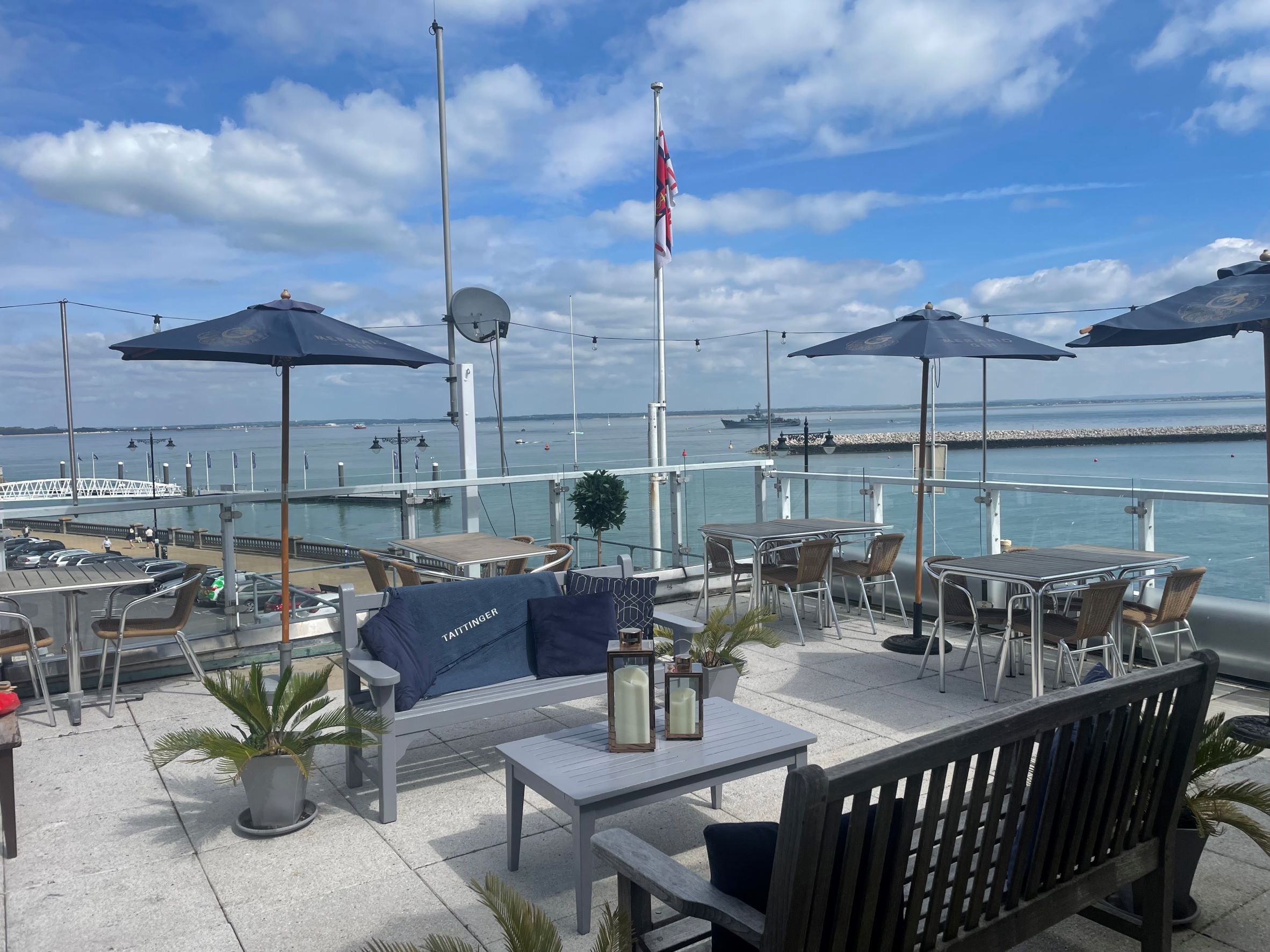
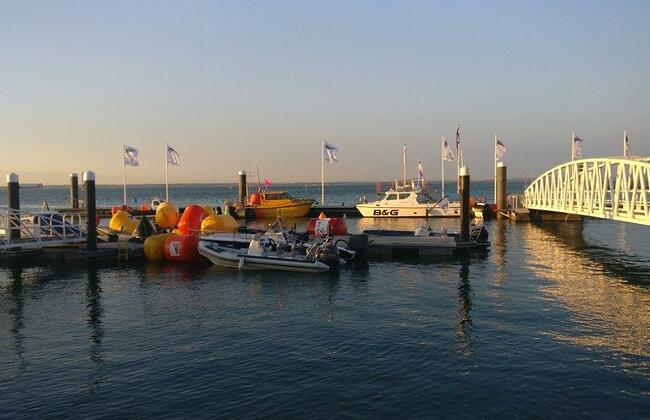
A few doors along, the occupies two Georgian town houses joined into one clubhouse, their shared party wall removed for a single grand staircase. Regency in style, the building has a first floor Drawing Room and a ground floor Dining Room, with a first floor balcony looking out over the water. The Parade itself is a narrow waterfront road running along the quay, the castle's battlements at one end and the yacht club balconies at the other.
runs pedestrianised above the quay, a retail spine of chandlers and small shopfronts set close together. The street bends rather than running straight, with painted render upper floors over the ground floor shops. Narrower back lanes drop down toward the water between the terraces.
Shot in Cowes
Top Gear drove an Aston Martin through Cowes around 2002 for a segment weighing the car against a house for sale in nearby Gurnard. The route took it along Cowes High Street, caught in a photograph from the shoot.
Top Gear
Cowes High Street
Top Gear drove an Aston Martin along Cowes High Street for a segment weighing the car against a house for sale in nearby Gurnard. A photograph from the shoot shows the car on the street itself, captioned as being in Cowes High Street.
What Cowes can double for
Lymington in Hampshire, England
Lymington's quay carries Georgian yacht club frontages mixed with later Victorian work, overlooking a narrow stretch of water, with balconies facing the moorings. The scale of the waterfront buildings and the narrow road in front of them matches the Parade closely. Lymington's buildings sit further back from a wider quay, so tighter framing on a single clubhouse facade keeps the comparison convincing. Try searching Georgian yacht club frontages now.
Dartmouth in Devon, England
Dartmouth's waterfront carries the same close set Victorian frontages stepping down to a narrow quay road, with chandlers and small shopfronts packed together above the water. The scale and the narrowness of the road match Cowes High Street and the Parade closely. Dartmouth's buildings run in brighter paint colours, so tightly cropped frames reduce the difference. Try searching narrow quay road now.
Dun Laoghaire's harbour clubhouses carry a similar Victorian seaside grandeur to the Royal Yacht Squadron, with verandas and balconies facing the water. The scale of the buildings along its piers is close to Cowes' waterfront frontages. Dun Laoghaire's clubhouses are painted render rather than ashlar stone, so framing that avoids the facade colour keeps the Victorian seaside grandeur comparison convincing. Try searching Victorian seaside grandeur now.
Southsea Castle in Hampshire, England
Southsea Castle is one of the same Device Fort program forts Henry VIII built to defend the Solent, and its limestone and castellated battlements share the same Tudor fort silhouette Cowes Castle had before its Victorian yacht club remodel. It has not been converted into a private clubhouse, so it reads closer to Cowes Castle's original form than to the building as it stands today. The lack of yacht club dressing on Southsea's castle means a wide establishing shot works better than close ups that would show the different use. Try searching Tudor fort silhouette now.