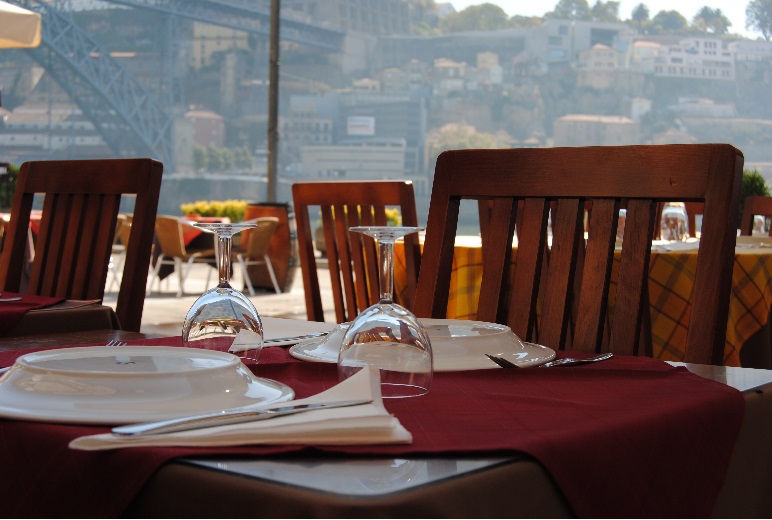
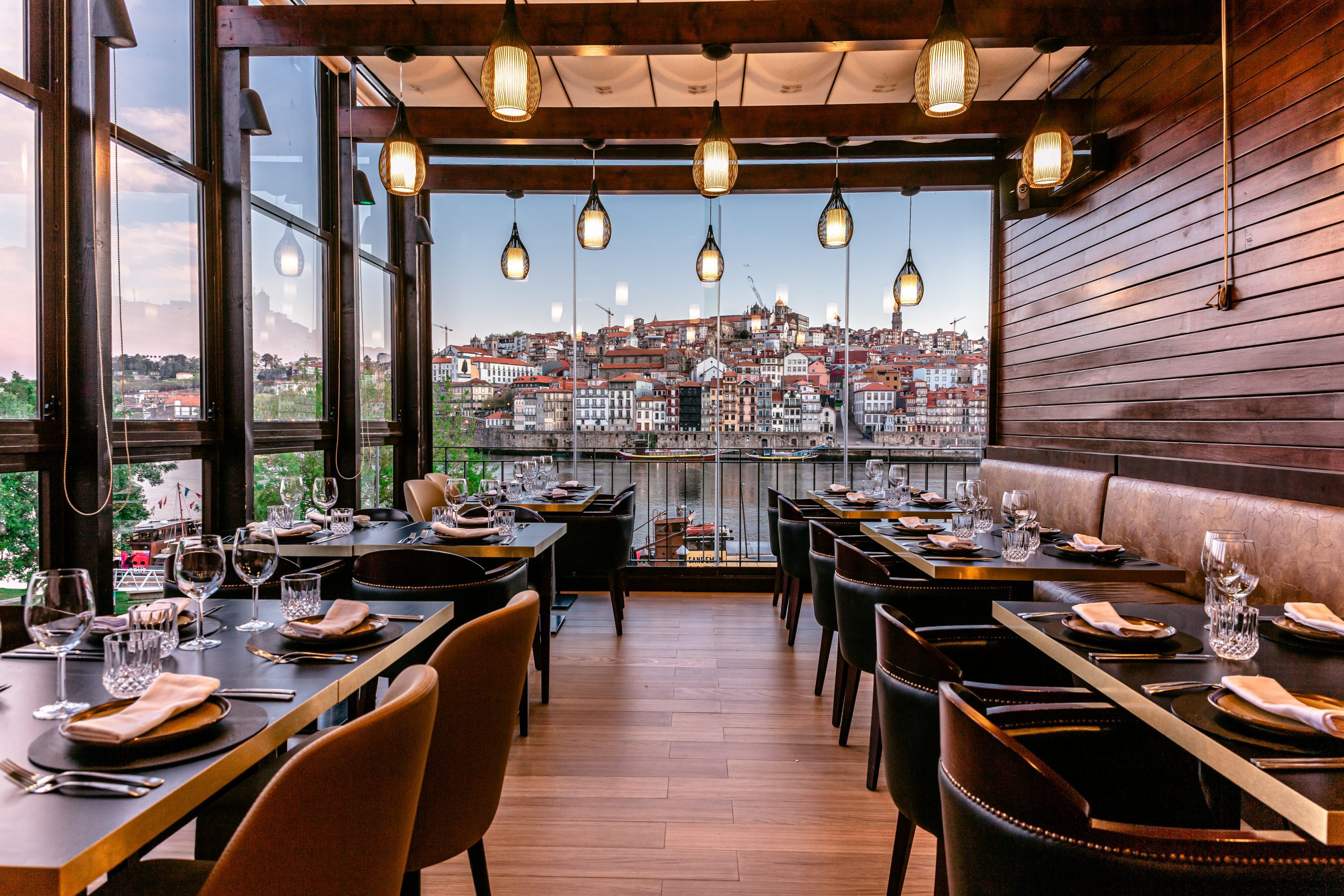
Tall granite houses rise in tiers above the Douro, with an iron double deck bridge crossing from the quay.
What Ribeira looks like
Tall houses climb the slope above the Douro in tiers, four to six storeys each, their granite walls faced with painted plaster and here and there a panel of blue and white azulejo tile. Iron balconies run the length of most facades, with laundry often strung between them and satellite dishes bolted to the stonework.
The streets behind the quay are steep, narrow and cobbled, cutting back from the river in short flights of steps. Some are too tight for a car. keeps its ground floor arcades and small bars at street level, under the same stacked housing.
opens onto the water, its ground floor arcades and stone slab paving dating from 1491. runs east along the Fernandine wall toward the , an 1880s double deck iron arch whose upper deck crosses high above the water to Vila Nova de Gaia.
Casa do Infante, on Rua da Alfândega, has stood on the same corner since 1325. The flat bottomed rabelo barges still tie up along the quay, in front of the cafes and restaurants that now fill the arcades.
Shot in Ribeira
Manoel de Oliveira shot his first feature, Aniki-Bóbó, on these same streets and the quay in 1942. The film follows a group of children who play and scheme along the waterfront, their games leading from the square to the water's edge past the boats tied up at the quay.
Aniki-Bóbó, 1942
The Ribeira quay
In Aniki-Bóbó the children of the story live and play along the streets and quay of Ribeira rather than on a built set, with the Dom Luís I Bridge and the moored boats along the Douro behind them. The production shot its exteriors here on the waterfront before finishing the film's interiors, among them the rooftop dream sequence, at the Tobis Portuguesa studio in Lisbon. Street View
Alfama's tall narrow houses climb steep, tiled hillside lanes in much the same medieval to nineteenth century scale as Ribeira's own stacked rows. The number 28 tram and Alfama's open view toward the wide Tagus estuary would need staying out of frame, since Ribeira's river is narrower and its own iron bridge far more prominent. Try searching steep tiled hillside lanes now.
Riomaggiore in Liguria, Italy
Riomaggiore's pastel houses stack in tight tiers above its small harbor, much the same vertical climb Ribeira makes above its own quay. The houses here are shorter and the harbor holds fishing boats rather than river barges, so a wide shot with cars or a larger river would give the real place away. Try searching pastel houses above a harbor now.
Hotwells in Bristol, England
Hotwells' terraces climb the slope beneath the Clifton Suspension Bridge over the Avon Gorge, echoing the way Ribeira's own houses rise under the deck of the Dom Luís bridge. Clifton's bridge is a single suspension deck rather than a two deck iron arch, and the gorge's green cliffs would need staying out of any wide shot. Try searching terraces beneath a gorge bridge now.