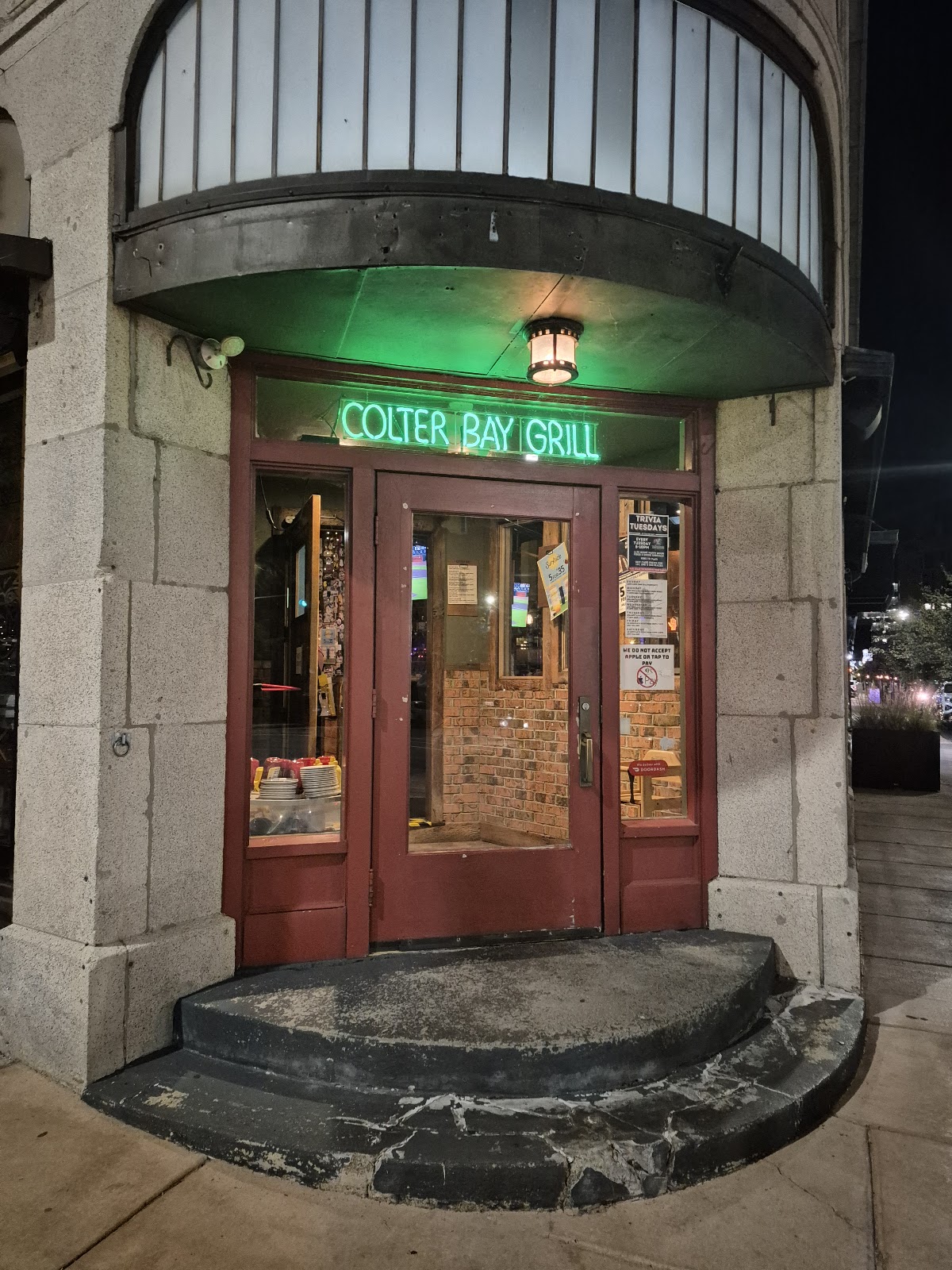
Wood frame and brick Victorian houses on narrow lots, and the colonnaded corner Nightmare Alley used as a 1940s bus station.
What Allentown looks like
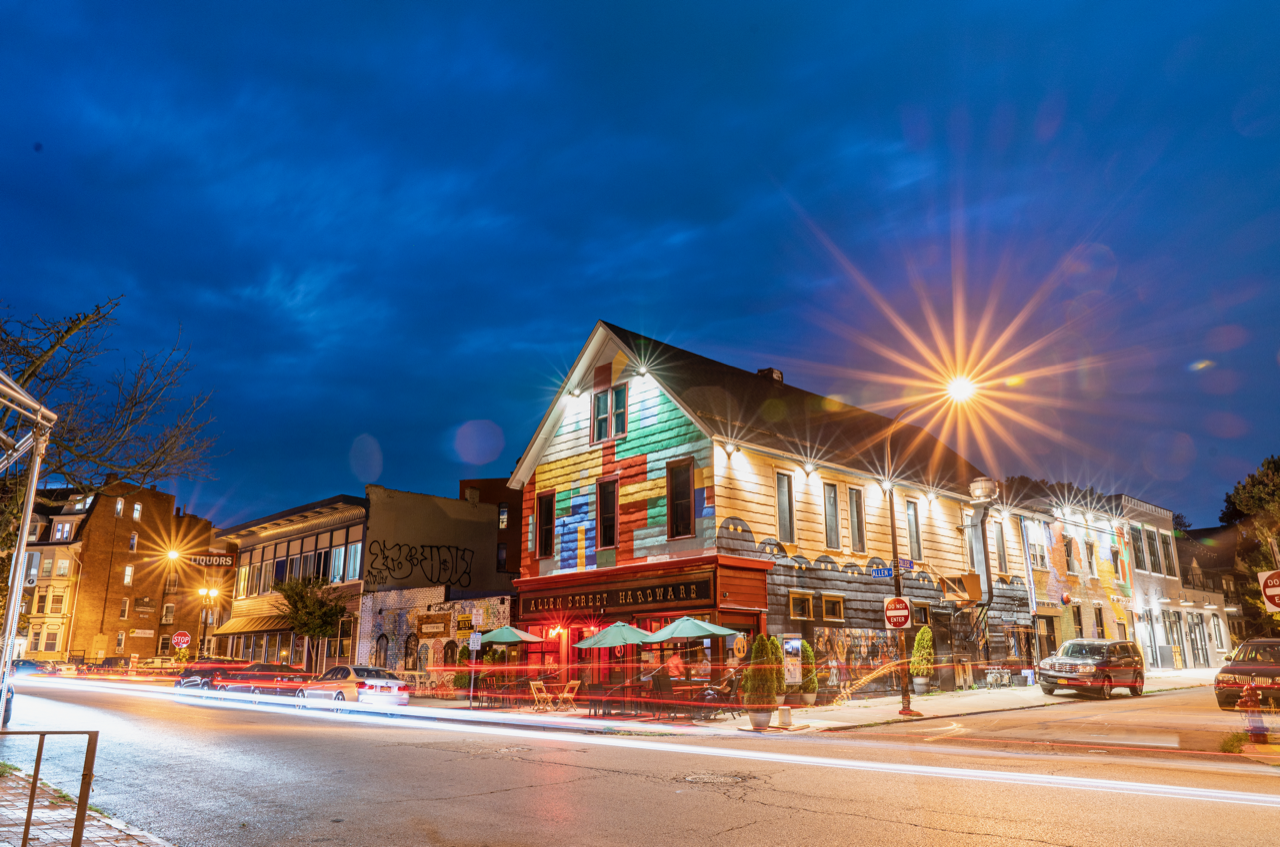
The streets are laid out as a narrow streetcar suburb, gridded around and Elmwood Avenue. Houses stand close together on narrow lots, mostly two or three storeys. Roughly three in four are wood frame rather than brick.
Italianate and Queen Anne houses are the most common on the residential blocks, with Shingle style and Colonial Revival mixed in and a few Second Empire and Gothic Revival fronts. Bay windows, wraparound porches and picket fences show up on the frame houses. Most of the district dates from the second half of the 1800s.
Brick commercial buildings line Allen Street and the upper blocks of Elmwood Avenue, most of them under five storeys with apartments above the storefronts. Frame commercial buildings and houses converted into shops fill in between them. A ghost sign for Chin's Chow Mein and the Islander Lounge is still visible on a brick wall on Main Street, at the district's eastern edge. The lounge has been closed for years.
stands on Pennsylvania Street near Symphony Circle, home to the Buffalo Philharmonic Orchestra. The on Delaware Avenue is the Theodore Roosevelt Inaugural National Historic Site. At Elmwood Avenue and North Street, a colonnaded former church with a full width portico marks the district's edge. , a circular green with a paved walkway around its edge, sits a few blocks south.
Shot in Allentown
Nightmare Alley filmed its 1940s bus station inside the colonnaded hall at Elmwood Avenue and North Street. The waiting and ticketing area was built inside its cavernous foyer, then home to the Karpeles Manuscript Library.
Nightmare Alley, 2021
Played a bus station's waiting and ticketing area, 1939 to 1941
The production built the waiting and ticketing area of a 1940s bus station inside North Hall's foyer, using its fluted Ionic portico as the depot's colonnade. The bus station's exterior was filmed separately, in Toronto. Street View
What Allentown can double for
Manchester in Pittsburgh, Pennsylvania
Manchester's brick Victorian rowhouses sit close together on narrow lots, with Second Empire and Italianate fronts from the same decades as Allentown's own houses. The district runs three storeys at most, which keeps the scale close to Allen Street's side blocks. Manchester's mansard roofs are more common than anything in Allentown, so keep the Second Empire towers out of a wide shot's middle ground. Try searching brick Victorian rowhouses now.
Ohio City's Italianate and Queen Anne houses share Allentown's period and its mix of frame and brick construction. West 25th Street plays a similar role to Allen Street, a commercial spine of storefronts under two and three storey houses. Ohio City's West Side Market gives the location away in a wide shot, so keep the frame on the residential side streets. Try searching Italianate Queen Anne houses now.
Corn Hill in Rochester, New York
Corn Hill's Greek Revival and Italianate mansions are grander than most of Allentown, closer to the wide lawned houses on North Street than to the narrow lots elsewhere. Both districts date from the same stretch of the 1800s. Corn Hill's lots are wider and its setbacks deeper, so a tight frame on one house works better than a full block. Try searching Greek Revival mansions now.