A walled shipyard on the East River holds brick machine shops and stone dry docks with old cranes.
What Brooklyn Navy Yard looks like
Flushing Avenue runs along the yard's south side, broken by gated entrances with oversized navy blue signs. Behind the gates, wide paved streets carry old names, Adams Street and Navy Street among them. Low brick buildings line them, one to three storeys tall, with arched window heads and loading bays at the sidewalk.
Six graving dry docks cut into the yard's edge on the East River, long concrete and granite basins with steel cranes still standing on rail tracks along their walls. Wallabout Channel runs between two of the piers, and the Manhattan skyline is visible straight across the water. Building numbers sit in wall mounted roundels, and old rail tracks still show through the asphalt in places.
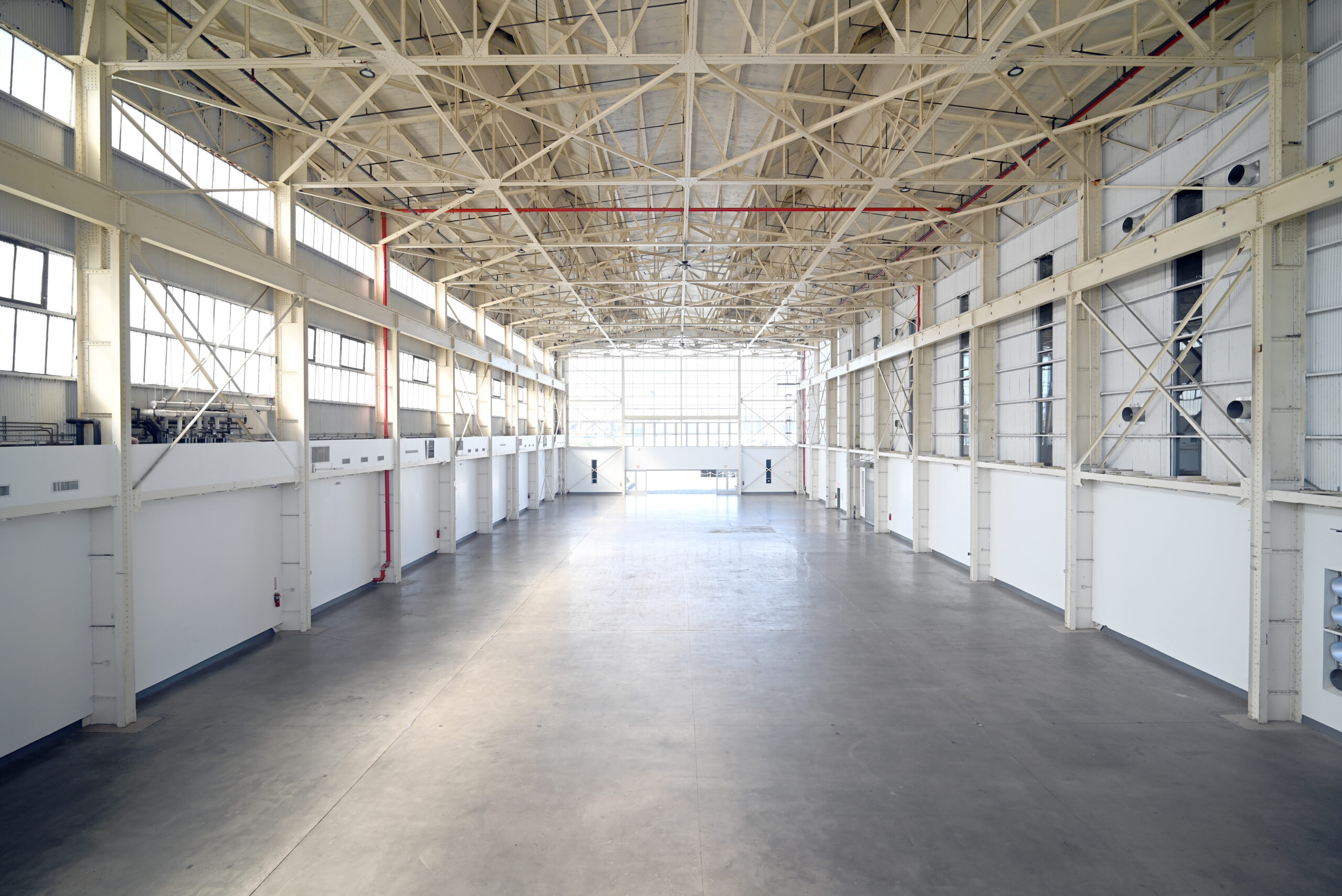
Some of the converted machine shops now hold plain event halls, exposed steel roof trusses and skylights over polished concrete floors. At the yard's northeast corner, a meadow of tall grass and wildflowers runs along a wood boardwalk, with wetland shrubs backing onto the water.
One Italianate house in stuccoed brick stands alone on Flushing Avenue, its bracketed cornice intact behind construction fencing, with a supermarket built up beside it. keeps its own glass fronted building and gate on Washington Avenue. A stepped glass tower on piers over the water, , stands at the yard's eastern edge. The dry docks and machine shops date from the 1800s to the 1940s, and the glass towers date from the 2010s.
Shot in Brooklyn Navy Yard
The Yard's own docks and cranes have played themselves on screen more than once. On the Town opens with sailors coming ashore here in 1949, and John Wick's ending plays out at one of its dry docks in 2014.
On the Town, 1949
Sailors set out from the Yard's own docks in the opening sequence, with a lifting crane at the water's edge and the Manhattan skyline behind them. The production filmed the Yard as itself, not standing in for anywhere else.
John Wick, 2014
Dry Dock 6 is where Wick's fight with Viggo Tarasov ends. An earlier scene sets Iosef's hideout in one of the Yard's own warehouses, with a sniper on a dockside crane. The production filmed the Yard's real docks and cranes rather than building a set.
What Brooklyn Navy Yard can double for
Philadelphia Navy Yard in Philadelphia, Pennsylvania
Philadelphia's own decommissioned Navy Yard has the same mix of brick machine shops, dry docks and gates that Brooklyn's does, since both were built to the same federal pattern. Its dry dock basins and gantries stand behind similar chain link and signage. Philadelphia's yard has been redeveloped further into office parks in places, so tighter frames near its dry docks and older brick rows keep the period consistent. Try searching brick machine shops dry docks now.
Chatham's preserved dockyard has covered slips and brick storehouses from two centuries earlier than Brooklyn's. It already works constantly as a production's stand in for period naval settings, with Georgian and Victorian brick fronts giving it an older, more ornamented look than the Yard's plainer 1940s shops. Chatham's cobbles and brick fronts are two centuries older than Brooklyn's own newest buildings. Its masts and ropewalk still need dressing out for a present day setting. Try searching period naval dockyard setting now.
Hunters Point Shipyard in San Francisco, California
Hunters Point Shipyard on the San Francisco waterfront still has idle gantry cranes and empty paved yards, a decommissioned federal shipyard on a similar scale to Brooklyn's. Its cranes and sheds sit closer to open water, with hills rather than a skyline behind them. Framing out the hills and using the water and cranes alone keeps the comparison working, since San Francisco's own skyline never appears in the same shot. Try searching idle gantry cranes empty yards now.