Low brick warehouses with roll down shutters and truck bays sit under two elevated train lines, with the Manhattan skyline visible down some blocks.
What Bushwick looks like
runs past low brick and cinder block buildings near , roll down shutters closed along the block and a run of Manhattan skyscrapers visible at the far end of the street. Truck bays and water towers mark the industrial blocks nearby, and painted signs stand in for brick facades on some of the walls.
The M train runs on elevated steel above Myrtle Avenue, with stations at and Knickerbocker Avenue reached straight from the sidewalk. The J and Z trains run on their own elevated line above , on the opposite side of the neighborhood.
Saint Barbara's twin white towers rise over and Central Avenue in a Spanish Baroque style, carved stone against yellow brick and visible from several blocks off. A red brick school building on has Gothic arches over its doors and a crenellated roofline along the top.
Off , a former factory building still has a BORDEN'S sign worked into its cornice, the window frames along its front painted in different colors. On the houses sit farther back from the curb behind iron fences, some with stoops, set among brownstones and larger apartment buildings.
Wood frame houses and brick rowhouses with fire escapes bolted to their fronts line the side streets between the avenues. Cinder block storefronts with roll down gates and hand lettered signs run along the commercial strips.
Shot in Bushwick
Bushwick (2017) is set in this neighborhood and keeps its own name on screen, and the production shot on its own streets rather than standing in for anywhere else. Directors Jonathan Milott and Cary Murnion worked within a few blocks of Wyckoff Avenue and the Jefferson Street station, the corner the film's opening subway scene uses.
Bushwick, 2017
Principal photography began in December 2015 on the streets around Wyckoff Avenue, Starr Street and the Jefferson Street station. Milott and Murnion built the film to look like a small number of very long takes, so the real corners and storefronts had to hold up in continuous motion rather than in cutaways. Street View
Market Frankford trains run on the same kind of riveted steel elevated structure above Kensington Avenue, with rowhouses and low storefronts close beneath the tracks. The scale and the low industrial blocks nearby read close to Bushwick's own mix of warehouses and residential streets. Philadelphia's rowhouses run in longer and flatter rows, with less brick color variation than Bushwick's mixed blocks. Kensington Avenue itself is narrower under the tracks, so a wide shot needs to keep SEPTA's own station signage out of frame. Try searching elevated trains above rowhouses now.
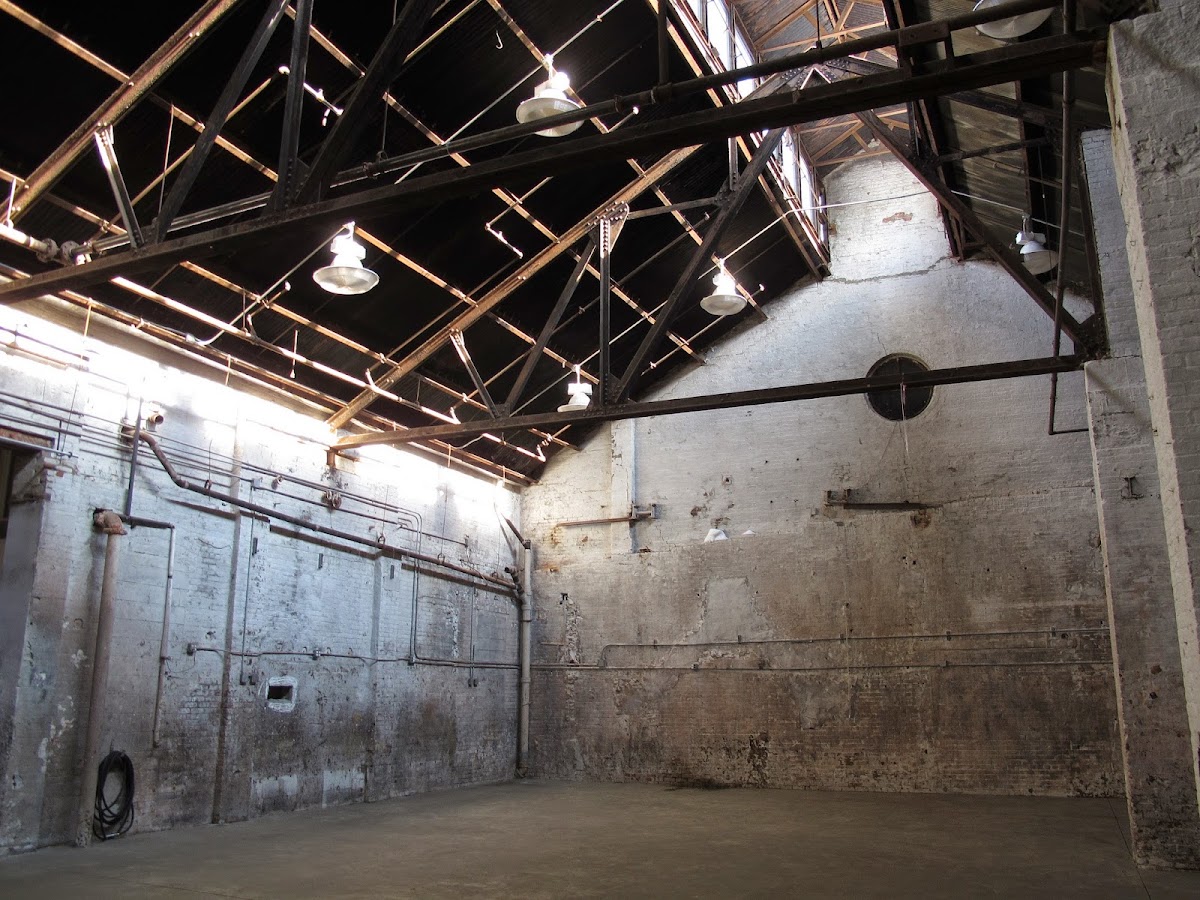
Converted warehouse buildings along 18th Street carry the same painted brick walls and loading docks as Bushwick's industrial blocks, several of them covered in large murals. Ceiling heights and truck bay widths in the converted buildings read close to Bushwick's own warehouses in a tight interior shot. Pilsen has no elevated line over its main industrial streets, so a wide shot needs to stay off the skyline and keep to the loading bays themselves. Chicago's service alleys sit behind the buildings rather than in front, unlike Bushwick's own blocks. Try searching brick warehouse loading dock now.
Tall mill buildings in red brick line the canal in Ancoats, with rows of arched windows and cast iron columns inside at a larger scale than Bushwick's own converted factories. The canal towpath gives the blocks a similar quiet, working edge. Ancoats reads taller and denser than Bushwick's low warehouses, and British road markings and signage need dressing out. The canal itself has no equivalent in Bushwick, so keep it out of a wide shot naming the area. Try searching red brick canal mill now.