A restored 1920s theatre block on Detroit Avenue, and the bank building Cherry used for a robbery scene.
What Detroit-Shoreway looks like
Detroit Avenue is the wide commercial spine through Gordon Square, its two and three storey brick blocks holding continuous ground floor storefronts under fabric awnings. The Capitol Theatre's vertical blade sign rises above the corner at West 65th Street, lit red and gold over a rounded brick facade with stone banding. Traffic signals hang from a mast across the intersection, and young trees stand in sidewalk planters the length of the block.
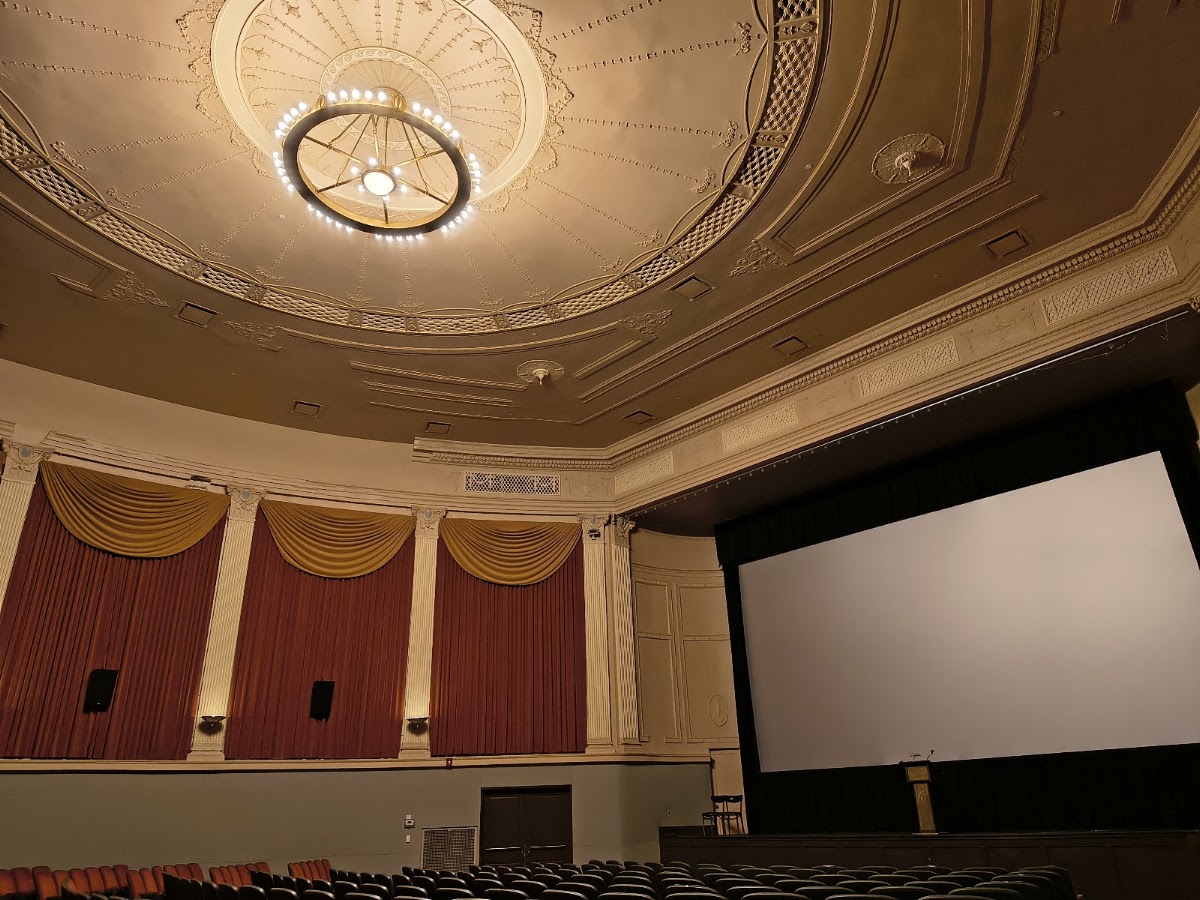
The holds a glass fronted lobby behind a green awning at street level, opening onto the Capitol Theatre's restored auditorium. Rows of orange seats curve toward a single screen under a plaster ceiling medallion, with gold curtains along both side walls. A second brick corner building across Detroit Avenue has bank signage at street level and continues the same stone cornice line east.
West of the theatre block, Detroit Avenue narrows past a mix of storefronts before giving way to side streets of double houses and single family homes. West 58th Street has a run of ornate Victorian brick houses with stone quoins and bay windows, set back behind small lawns. stands a few blocks south on West 54th Street. Its stone Gothic bell tower rises well above the surrounding rooflines, with arched doors facing a paved forecourt.
Shot in Detroit-Shoreway
The Russo brothers shot Cherry along Detroit Avenue in Gordon Square, and the street closed between West 65th and West 70th Street for the production. Filming moved between two real storefronts a few blocks apart, dressed for a bank robbery and for a street scene outside a Subway.
Cherry, 2021
Pioneer Savings Bank
The production filmed a bank robbery scene inside the Pioneer Savings and Loan building, a mid-century bank with its own projecting clock sign over the door. Tom Holland was also filmed several blocks west at a Subway storefront beside Georgio's pizza near West 70th Street, and Detroit Avenue closed to traffic between West 65th and West 70th for the shoot.
What Detroit-Shoreway can double for
Hamtramck in Detroit, Michigan
Hamtramck's Joseph Campau Avenue has the same run of two and three storey brick storefronts from the same decades, with similar cornice lines and narrow upper floor windows. Hamtramck's storefronts sit closer to the kerb with less sidewalk depth, so a wide shot needs care to keep modern signage further down the block out of frame. Try searching brick storefronts cornice lines now.
Findlay Market in Cincinnati, Ohio
The blocks around Findlay Market have the same two and three storey brick commercial buildings, storefronts under awnings and little later infill, a fair match for Gordon Square's own commercial spine. Cincinnati's hillier streets and more ornate cast iron storefronts show in a wide shot, so tighter frames hold the illusion best. Try searching brick commercial storefronts awnings now.
Milwaukee Avenue through Wicker Park keeps a similar run of early twentieth century brick storefronts with upper floor apartments, though the avenue itself runs wider and busier than Detroit Avenue. Wider traffic lanes and taller buildings nearby need a tight frame to avoid giving away the scale difference. Try searching early brick storefront avenue now.