Five rust colored blast furnace stacks rise over a paved plaza where Transformers: Revenge of the Fallen filmed its Shanghai battle scene.
What SteelStacks looks like
Five rust colored blast furnace stacks rise in a row over the plaza, connected by curved and angled pipework and catwalks. The two tallest stand more than 230 feet, each one a riveted steel shell streaked with rust and climbed by spiral stairs and steel landings. The oldest furnace went up in 1915 and the row last made iron in 1995.
The is an elevated steel walkway that runs 1,650 feet along the base of the furnaces, the old narrow gauge rail track still set into its deck. A stabilized brick machine hall stands beside it, tall arched windows and a steel truss roof over rows of rusted blowing engines visible from a staircase off the trestle.
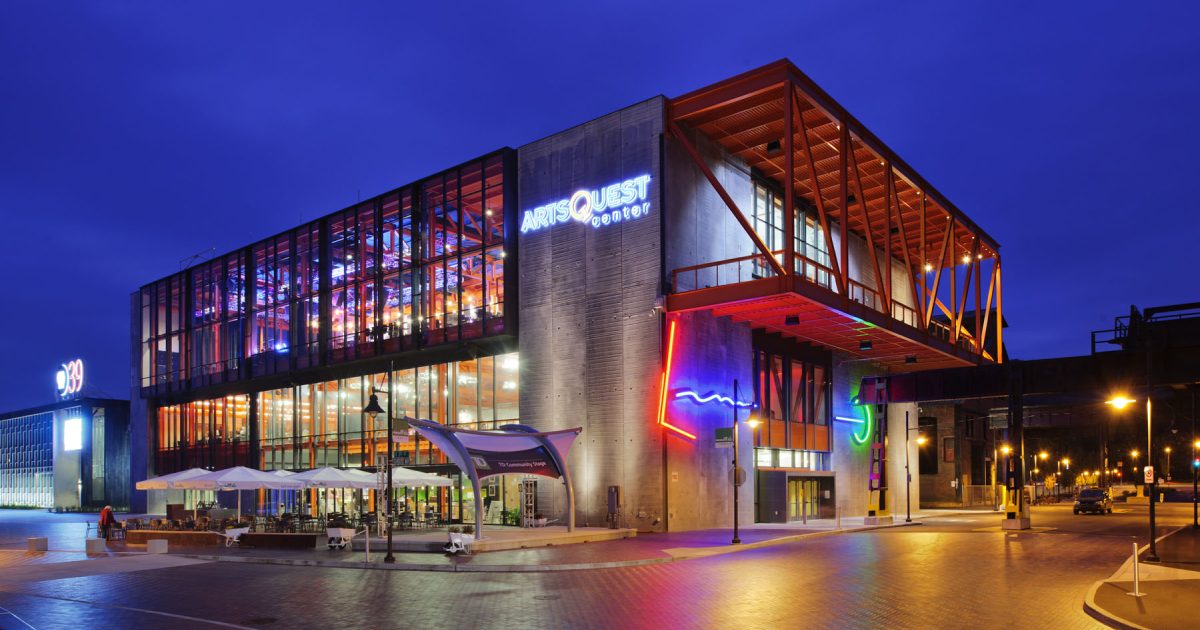
The 's glass front faces a paved plaza at the furnaces' western end, a curved steel arch rising over the brick pavers. Older red brick shop buildings, some with ivy climbing the walls, line the plaza's far side. Floor to ceiling windows wrap the Musikfest Café on the building's third floor.
The Levitt Pavilion's sloped lawn holds about 2,500 people at the foot of the stacks, its lighting designed by Hervé Descottes. Rail sidings run behind the furnace row toward the Lehigh River. After dark, a separate lighting system installed in 2015 washes the stacks in color, cycling through red and blue and purple.
Shot in SteelStacks
For Transformers: Revenge of the Fallen, the production filmed its Shanghai battle scene among the preserved blast furnaces as the backdrop for Autobots and Decepticons fighting through the wreckage. The furnaces appear largely as they stand today, rust and connecting pipework left in place rather than redressed for the shoot.
Transformers: Revenge of the Fallen, 2009
Hoover-Mason Trestle
Played the blast furnace plaza, Shanghai, China, present day
Sideways and Demolishor are destroyed here during the Shanghai battle, staged among the real furnace structures rather than a built set. The rust streaked steel and connecting pipework read on screen largely as they do in person. Street View
What SteelStacks can double for
Carrie Furnaces in Rankin, Pennsylvania
Carrie Furnaces #6 and #7 stand rust streaked and idle over the Monongahela River at Rankin, two blast furnace shells that stopped making iron in 1978. Rivers of Steel now runs public tours through the site, the same adaptive reuse of an old steel plant as SteelStacks. The furnaces here stand shorter than SteelStacks' row and nothing like the glass fronted arts building sits beside them, so a wide shot needing a modern structure in frame will not match. Try searching rust streaked steel blast furnaces now.
Sloss Furnaces in Birmingham, Alabama
Sloss Furnaces in Birmingham ran two 60 foot blast furnaces from 1882 to 1971 and now hosts concerts and festivals as a public events venue, the kind of calendar SteelStacks also runs. Both pair a preserved ironworks with regular public use rather than a roped off exhibit. Sloss Furnaces' towers stand well under half the height of SteelStacks' tallest and the yard is flatter and more open, so a shot needing SteelStacks' full furnace skyline will not match. Try searching concert festival venue blast furnaces now.
Landschaftspark Duisburg-Nord keeps the furnaces of a former ironworks standing in a public park at Duisburg, lit in colour after dark. It is the closest match anywhere to SteelStacks' own floodlit furnace row, though one of its blast furnaces has been converted into a climbable viewing tower that visitors can enter, which no furnace at SteelStacks allows. Visitors climb inside the Duisburg furnace itself and through former ore bunkers turned into climbing gardens, access SteelStacks does not allow, so an interior or summit shot would need Duisburg's own permissions rather than standing in for it. Try searching furnaces lit in colour now.