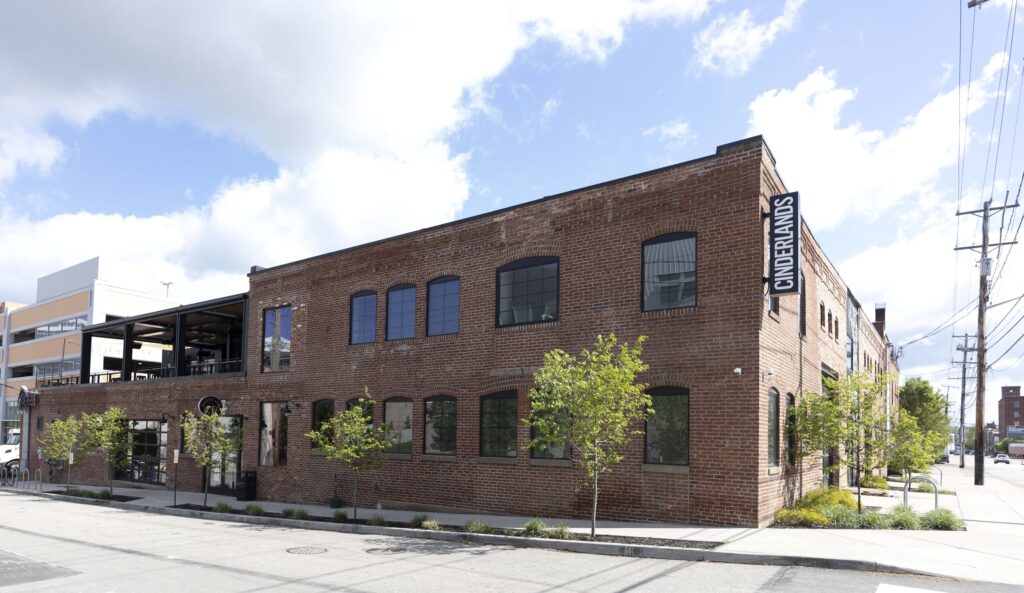
Brick produce warehouses with steel canopies over the sidewalk, and the Smallman Street exterior Jack Reacher used for its bar fight scene.
What Strip District looks like
Smallman Street and Penn Avenue are the two commercial spines of the Strip District, a narrow band of streets between the Allegheny River and the hillside above it, covering about half a square mile. Brick warehouses with steel frames line both streets, several with canopies that shelter loading docks and the sidewalk stalls beneath them.
The runs the length of several blocks on Smallman Street, a steel framed, brick and stone building put up in 1926 in an Art Deco and Moderne style. Its long facade now holds retail and dining storefronts under the name The Terminal, with new glass fronts and signage set into the original brick arches along parts of the block.
Penn Avenue is the retail side of the district, with ethnic grocers and produce stands trading off sidewalk tables and folding stalls. Wholey's fish market and the still trade from their storefronts there, and faded painted signs from earlier tenants remain on the upper walls above the current awnings.
A freight rail line runs along the river side of the district, within sight of downtown Pittsburgh's high rises at the end of several cross streets. Restaurants and bars fill the same ground floors after dark that the produce trade uses by day.
Shot in Strip District
Jack Reacher's opening bar fight ends with Reacher beating five men outside a bar on Pittsburgh's South Side. The production shot that exterior aftermath a couple of miles away, outside 1900 Smallman Street at 20th Street in the Strip District.
Jack Reacher, 2012
The exterior shots of the fight's aftermath were filmed here rather than at the bar itself. The interior, Mario's South Side Saloon, is a real bar on East Carson Street on the opposite side of the city.
What Strip District can double for
West Bottoms in Kansas City, Missouri
West Bottoms in Kansas City has the same brick industrial warehouses from the early nineteen hundreds, built beside stockyards and rail lines where two rivers meet. The blocks run to a similar scale as the produce terminal along Smallman Street. Repurposed loft interiors and elevated viaducts show up more often there than in Pittsburgh, so keep wider shots to the street level brick fronts. Try searching brick industrial warehouses now.
Lower Downtown in Denver, Colorado
Lower Downtown in Denver, called LoDo, has brick warehouse blocks from the same railroad era. A height limit written into the district's own zoning holds the blocks to a low roofline. Restaurants and bars now fill the ground floors, the same shift already underway on Smallman Street. Denver's streets run wider than Pittsburgh's, so a tighter frame keeps the scale honest. Try searching brick warehouse blocks now.
Fulton Market District in Chicago, Illinois
Chicago's Fulton Market district was a meatpacking and produce warehouse quarter for most of the twentieth century, landmarked in 2015 over roughly seventy four acres of that same low brick stock. Renovation there has gone further than in the Strip District, with glass additions on several rooflines. Frame low and avoid the rooftop additions to keep the period reading closer to the 1900s to 1950s the Strip District still shows at street level. Try searching meatpacking warehouse quarter now.


.jpg)
.jpg)