Whitewashed cave dwellings cut into a dry hillside, each behind its own arched doorway.
What Sacromonte looks like
The runs along a ravine above the Darro valley, with cave dwellings cut into the slope on one side and a drop toward the river on the other. Each dwelling shows a single storey at the front, a whitewashed wall around one arched doorway, sometimes a small window with iron bars. Geranium pots by the door are often the only decoration.
Inside, the rock is a soft conglomerate that can be cut by hand but holds its shape well enough to form an arched room with no beams or posts. The , at , keeps eleven of these rooms open. A kitchen, a bedroom, a stable and a basket maker's workshop are cut one after another into the hillside. Every one of them holds a temperature of about 17 degrees year round.
Farther up the Camino, the stands apart from the caves, a tall stone and brick building from the 17th century with a row of arched balconies across its front. Its terrace looks back across the valley toward the Alhambra.
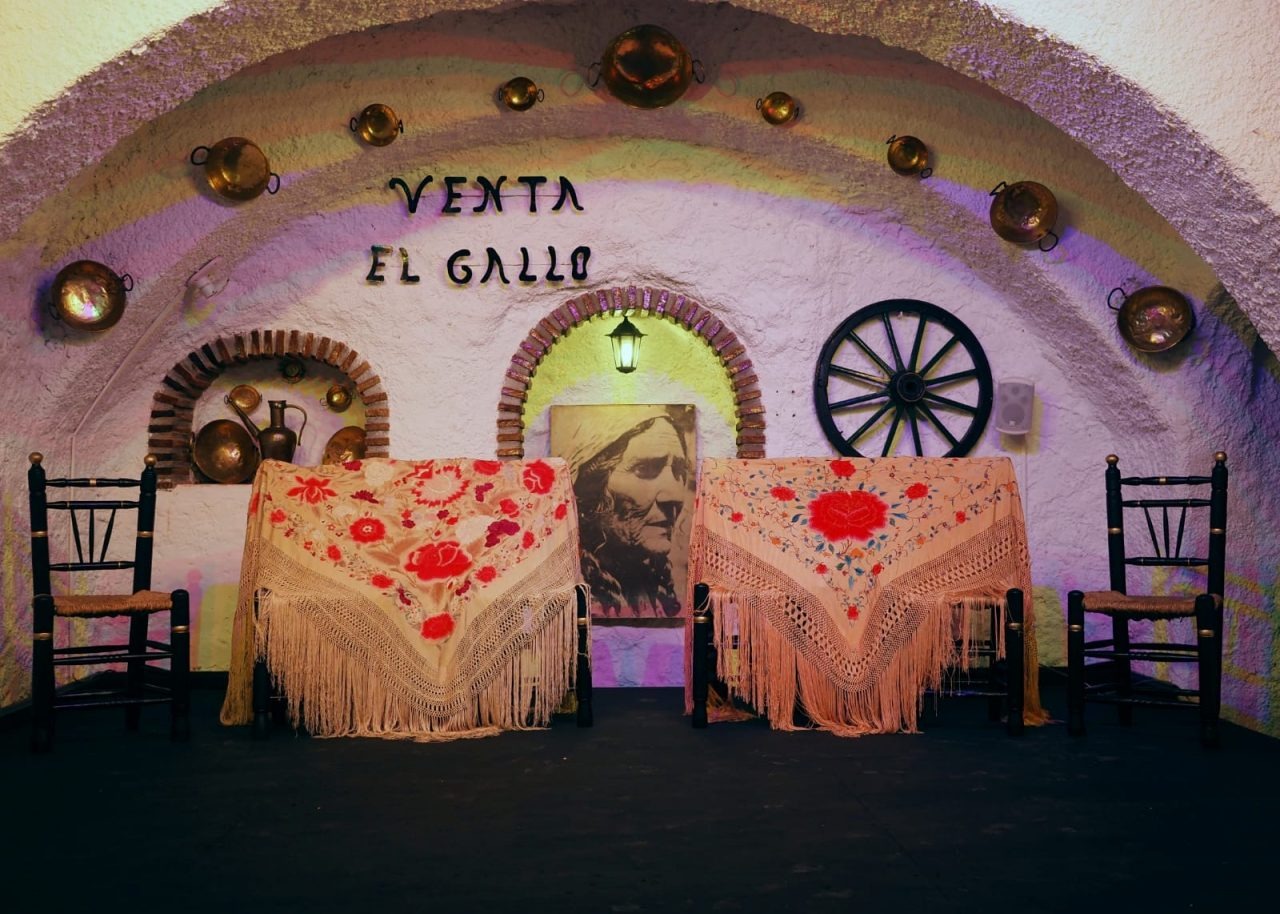
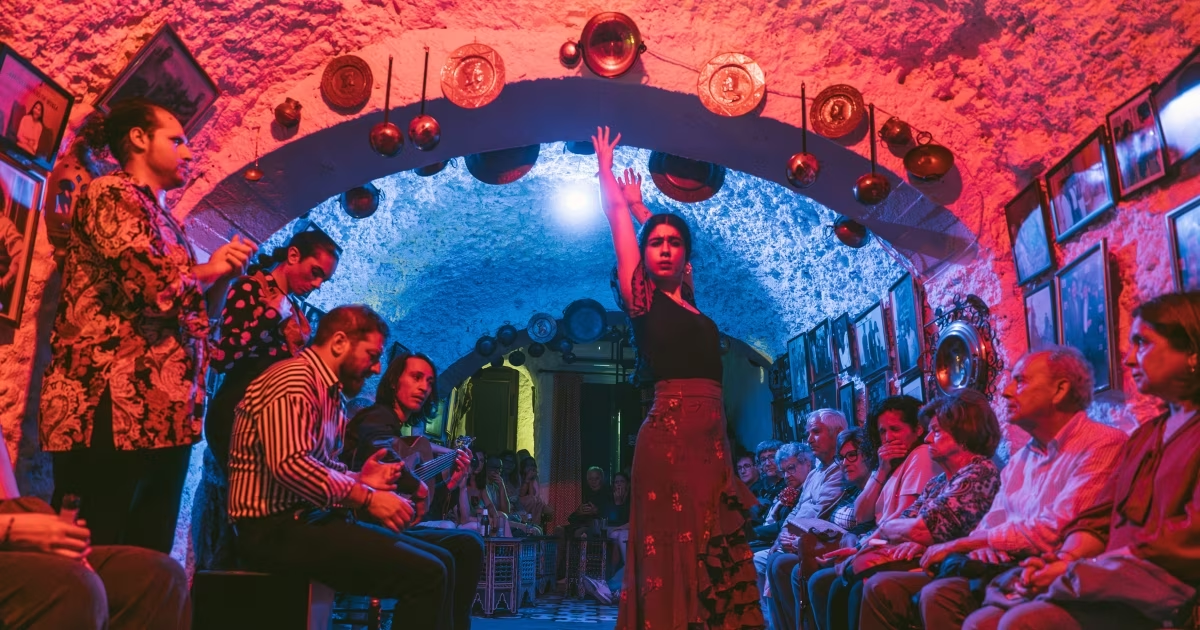
Some caves along the track operate as flamenco venues, small rooms cut into the rock with bench seating and a bare floor for a zambra performance. , one such venue on the Camino, takes its name from the prickly pear growing on the bank above it.
Shot in Sacromonte
The only sourced production to film inside Sacromonte is a documentary, shot along the cave dwellings its own residents occupy. Chus Gutiérrez's crew followed the Camino del Sacromonte in 2014 to record the neighborhood's own flamenco history.
Sacromonte. Los sabios de la tribu, 2014
Camino del Sacromonte
The documentary was shot along the Camino del Sacromonte and inside its cave dwellings, with Chus Gutiérrez interviewing residents who grew up there. The caves themselves appear on screen rather than a set built to resemble them.
Barrio de Cuevas cuts whitewashed cave houses into the same kind of soft hillside rock as Sacromonte, with single storey doorways and no fixed street grid. Guadix holds more than two thousand such dwellings, so a wide shot has more hillside to work with than Sacromonte's one track. Guadix's satellite dishes and paved driveways show up in wide shots and need dressing out for an older period. Try searching whitewashed cave houses hillside now.
Matmata, Tunisia
Matmata's troglodyte cave dwellings are cut from a similarly soft rock and show the same bare, sunbaked plainness as Sacromonte's caves from a distance. Star Wars used one of its courtyard homes as the Lars family's underground house during filming in 1976. The dwellings there are dug downward into a pit rather than cut sideways into a hillside, so a doorway or a courtyard shot holds the resemblance better than a street view. A wide shot showing the pit layout or the surrounding desert gives away the difference from Sacromonte's hillside track immediately. Try searching troglodyte courtyard cave dwelling now.
Göreme, Nevşehir
Göreme's fairy chimney cave dwellings are carved from a similarly soft volcanic rock, with doorways and small windows cut directly into the stone the way Sacromonte's are cut into its hillside. The chimney formations rise as separate cones rather than a continuous slope, so the resemblance holds in a close doorway shot more than in any wide view. The pale tan rock colour and conical shapes read differently from Sacromonte's whitewashed fronts in daylight, so shooting in shade or close to a doorway helps hold the match. Try searching fairy chimney cave dwelling now.