Blue brick railway viaducts cross red brick warehouses converted into studios, with cobbled crossovers and self-seeded buddleia on the arches.
What Digbeth looks like
Brick railway viaducts cross the streets on tall arches of Staffordshire blue brick, with workshop units built into the spaces underneath. Allison Street keeps a short stretch of cobbles where it passes beneath one arch, and self-seeded buddleia and birch grow along the top edges of the brickwork.
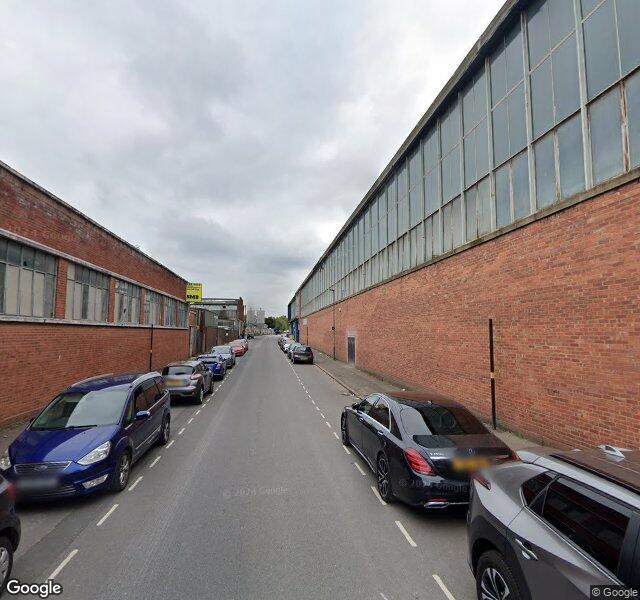
Red and blue brick warehouses line the narrow street frontages, two to four storeys for most buildings and up to five on the larger industrial ranges, with terracotta and faience trim on some of the fronts. The carriage entrance and two storey tower of survive from 1860, though the rest of the complex it once served was pulled down around 1960. Digbeth Cold Storage, a long arcaded brick range from 1900, has its name spelled out across the upper storey in white lettering.
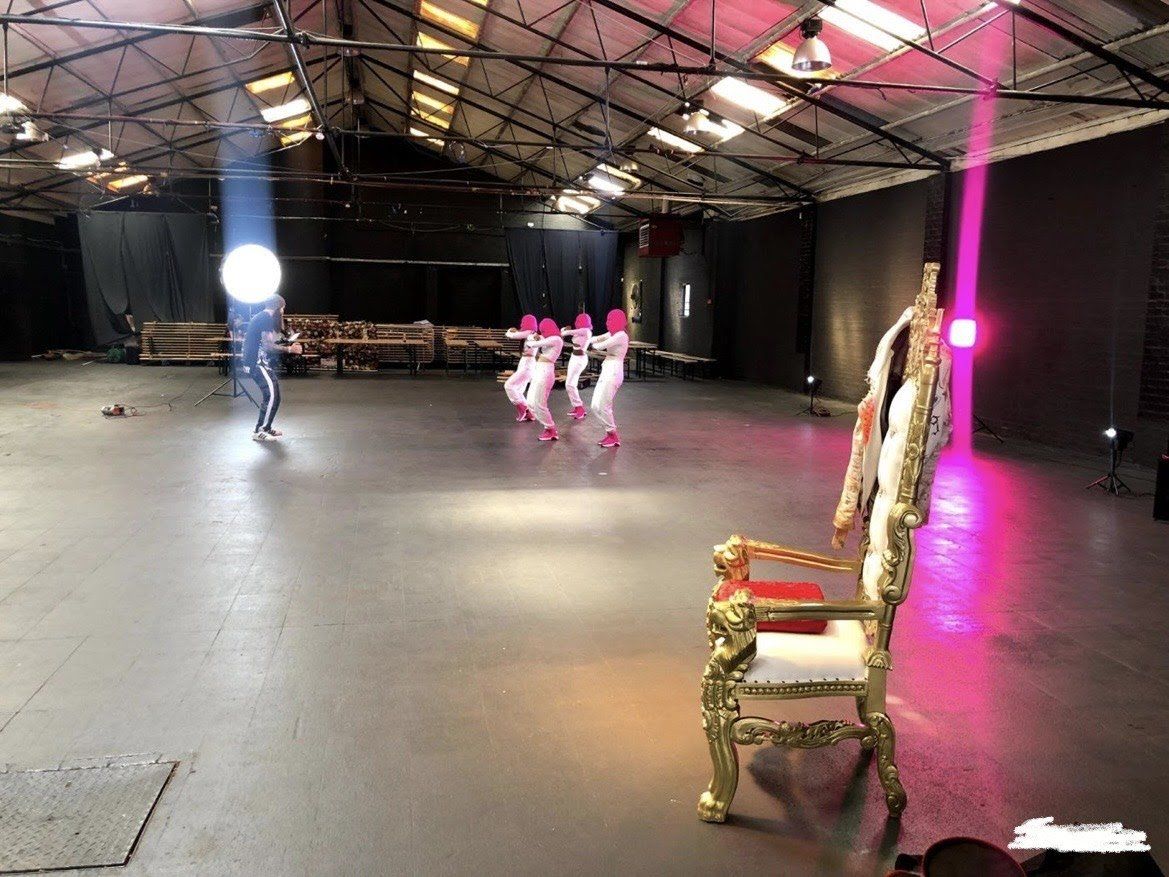
Many of the old warehouses now hold small independent units, trading as studios, cafes and bars behind their original brick fronts. The former Unitarian chapel on Fazeley Street, pointed arched windows and a round window set into its gable, has been converted into workspace office units. , an artist led gallery, occupies a works building at 19 Minerva Works on the same street.
Gap sites and newer construction break up the Victorian grain in places, including a curved pale brick block with timber framed windows rising on the corner of Allison Street. Footways through the area are mostly concrete slabs and asphalt, with granite kerbs along the main routes.
Shot in Digbeth
Ready Player One sent its characters fleeing under the railway arch on Floodgate Street. They lie low from IOI's drones in the yard beside Ashton Engineering Co. The same production shot a rooftop garden scene on top of the former Typhoo Tea Factory on Bordesley Street, standing in for a view over the OASIS city of Columbus.
Ready Player One, 2018
Played a postal yard, Columbus, Ohio, 2045
Aech's postal van turns off Floodgate Street and under the brick railway arch. It pulls into the yard beside Ashton Engineering Co, fleeing IOI's drones. More street art covers the yard walls now than appeared in the finished film. Street View
Hackney Wick's warehouses along the canal and under the railway arches share the same red brick and conversion into studios and small venues as this area, both built up around water and rail rather than a street grid. Similar street art appears across the towpath walls in both places. Hackney Wick's Olympic Park towers break the skyline in a wide shot, so tighter frames along the canal or under an arch hold the match better. Try searching canal warehouses under railway arches now.
Shoreditch's red brick Victorian warehouses around Redchurch Street share comparable terracotta and faience trim with this area's own frontages, both converted into small studios and bars behind a narrow street frontage. Shoreditch is more built up on both sides of the street with less open sky, since the railway viaducts here leave wider gaps overhead. Try searching red brick warehouses terracotta trim now.
Ancoats' canalside cotton mills and brick warehouses are a similar scale and date range to this area's own industrial buildings, both set along a canal cut through a city centre fringe. The two have not been matched on a production, so the comparison rests on the architecture rather than a credit. Ancoats' mills run taller and more uniform than the mixed frontages here, so a single block held in frame works better than a long street run. Try searching canalside brick cotton mills now.