White and red brick Victorian terraces and sandstone villas line broad streets behind hedges, with Jesmond Dene a few streets away.
What Jesmond looks like
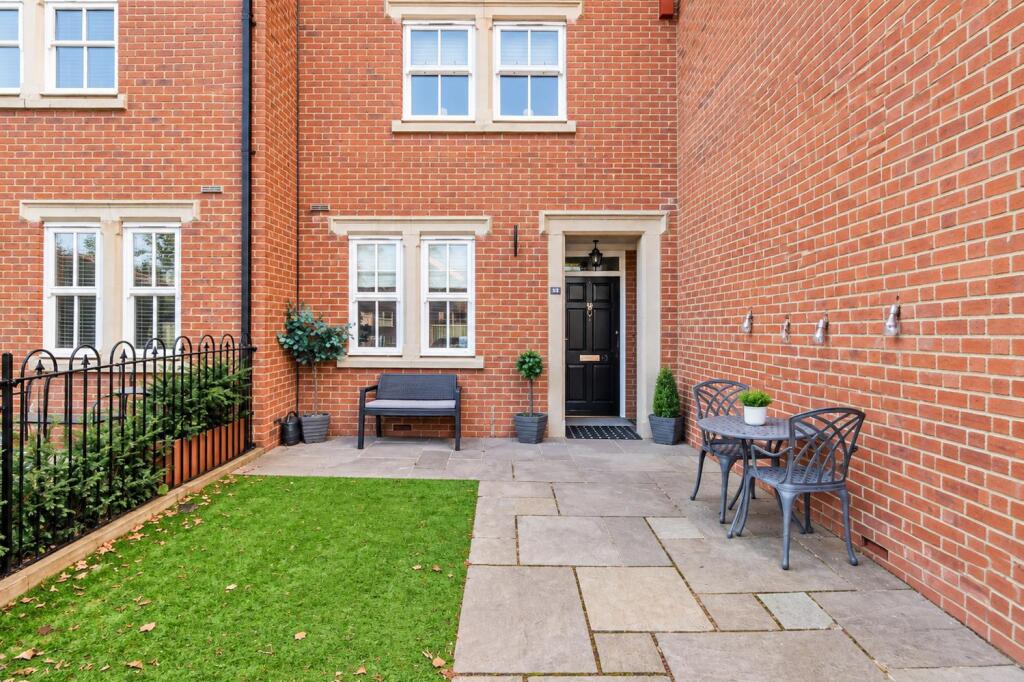
runs quietly north of the main road, three storey brick houses behind iron railings and small front gardens. A short walk away, the South Jesmond Conservation Area holds a run of Victorian terraces and villas built mostly between 1858 and 1898. Osborne Avenue has a two storey white glazed brick terrace on its north side. Ground floor bay windows, ashlar window dressings and panelled front doors repeat under a continuous dentil band at the eaves. A Grade II listed Penfold pillar box, put up between 1872 and 1879, stands by number 4 Osborne Villas on the opposite side.
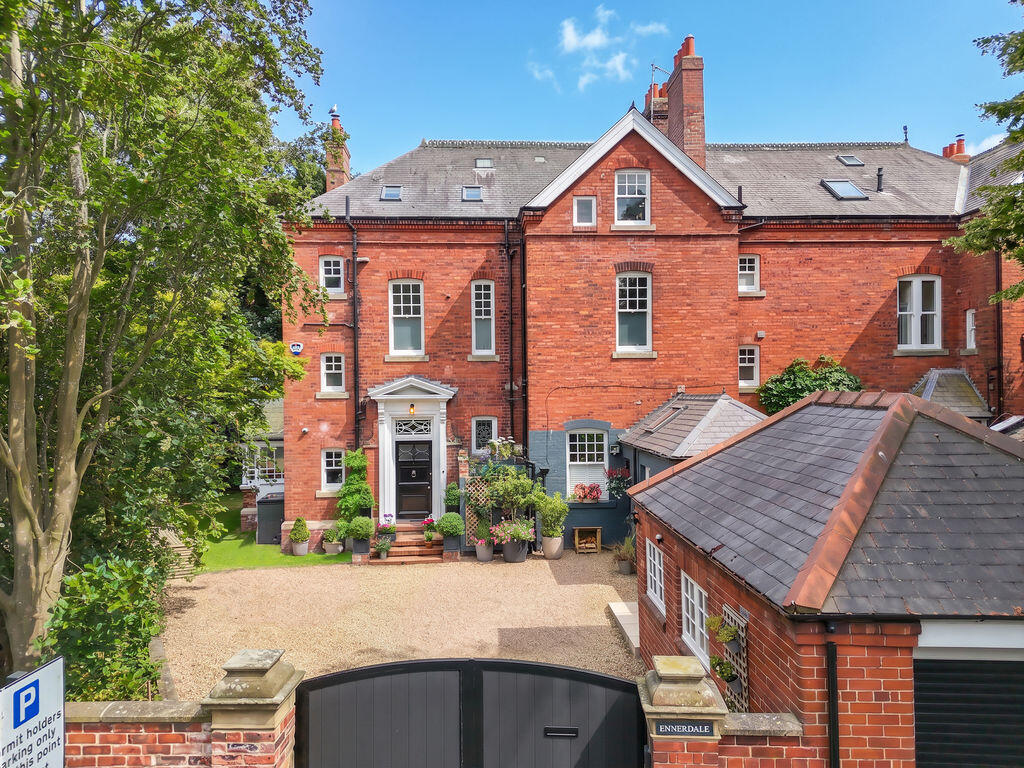
Clayton Road, Fernwood Road and Granville Road hold larger detached and semi detached villas, set back behind long driveways and mature gardens. Some are built in sandstone or buff brick in an Italianate style, others in later red brick Queen Anne elevations. , on the corner of Clayton Road, is a sandstone Italianate villa with a central campanile tower and a tall chimney above the roofline. The stands near the Fernwood Road and Granville Road junction, built from rough hewn sandstone blocks with a castellated porch and a banded slate roof.
's red brick houses keep the same ashlar window surrounds and bay windows at ground and basement level, with slate roofs and sliding sash windows largely intact. Jesmond Dene sits to the east, a wooded valley along the Ouseburn with the iron crossing it, now closed to traffic.
Shot in Jesmond
MTV's Geordie Shore filmed its first series at a house on Carlton Terrace, identified by MovieMaps as number 9. The CBBC series The Dumping Ground used the former La Sagesse convent school on Jesmond Dene Road as Elmtree House for its own first series, but Barratt Homes redeveloped the site for housing in 2014 and that building no longer stands.
Geordie Shore, 2011
Carlton Terrace
MTV's Geordie Shore filmed its first series at a three storey terraced house here, which MovieMaps identifies as number 9. The cast moved to a business park in Wallsend for the second series, so this is the only one Jesmond itself played.
Didsbury's tree-lined avenues off Wilmslow Road carry the same red brick Victorian villas with bay windows and generous front gardens, built across roughly the same decades as Jesmond's own. Cavendish Road and Old Broadway hold the closest comparison, wide streets set well back from large semi-detached houses. Didsbury's brick runs a deeper red than Jesmond's white glazed terraces, so a white-brick block is the easier match. Modern car clutter needs keeping out of wide shots on both streets. Try searching red brick Victorian villas now.
Fitzjohn's Avenue in London, England
Fitzjohn's Avenue is a boulevard of red brick villas in Gothic, Italianate and Queen Anne styles, built from 1876 to 1888 and set back behind long front gardens. That is the same decades and the same mix of styles as Clayton Road and Fernwood Road, though turrets and terracotta ornament make individual houses busier than Jesmond's. Hold wide shots to the villas themselves, since Hampstead's steep hill and denser modern infill nearby would give the location away. Try searching Italianate red brick villas now.
The Park Estate in Nottingham, England
The Park Estate's sweeping crescents stand at a similar scale to Clayton Road's, grand Victorian villas and terraces built mostly between the 1850s and the 1890s. Large stone and brick houses sit behind mature gardens on both, though the crescents curve more than Jesmond's straight roads. Avoid the estate's curved crescents and gatehouses in a wide shot; they are too distinctly Nottingham. Try searching grand Victorian villas crescent now.