A concrete flyover over a roundabout of office towers, and the riverside pub where No Time to Die staged Bond's meeting with M.
What Hammersmith looks like
sits inside a gyratory ringed by office towers in pale stone and glass. Buses pull into a two-level station under a curved glass canopy, with a church spire rising behind the roofline. Piccadilly and District line trains run into a separate platform under their own curved glass roof nearby.
The runs above the roundabout on sixteen concrete spans, built in 1960 and 1961. The shopping centre beneath it, built in 1994, has its own bus station set into the base of the block.
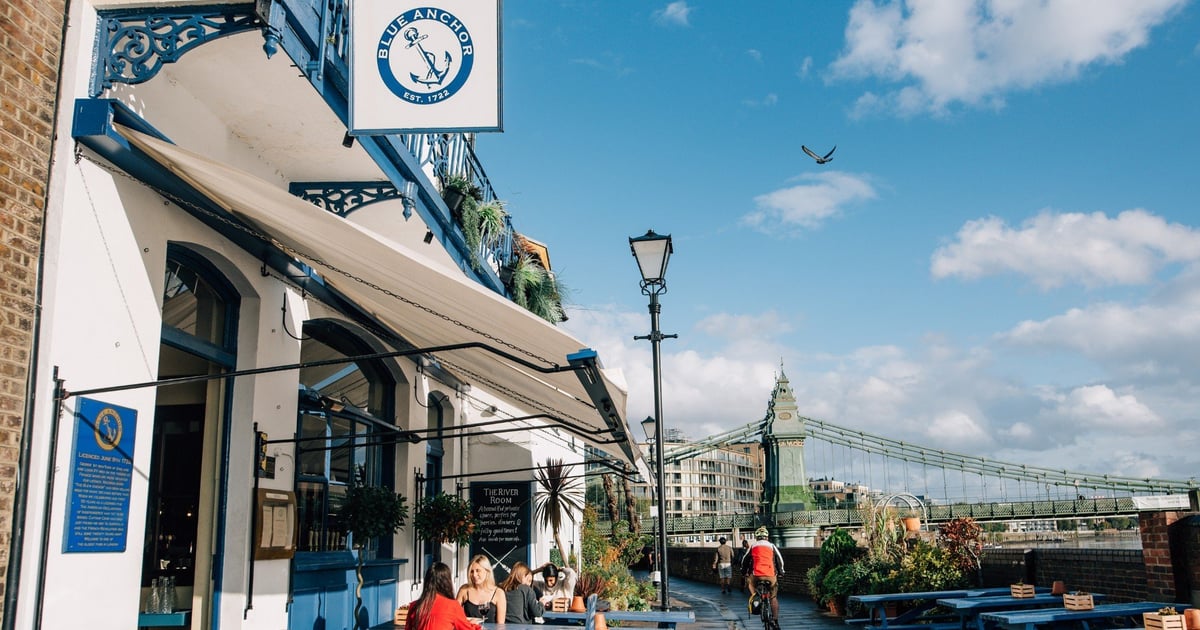
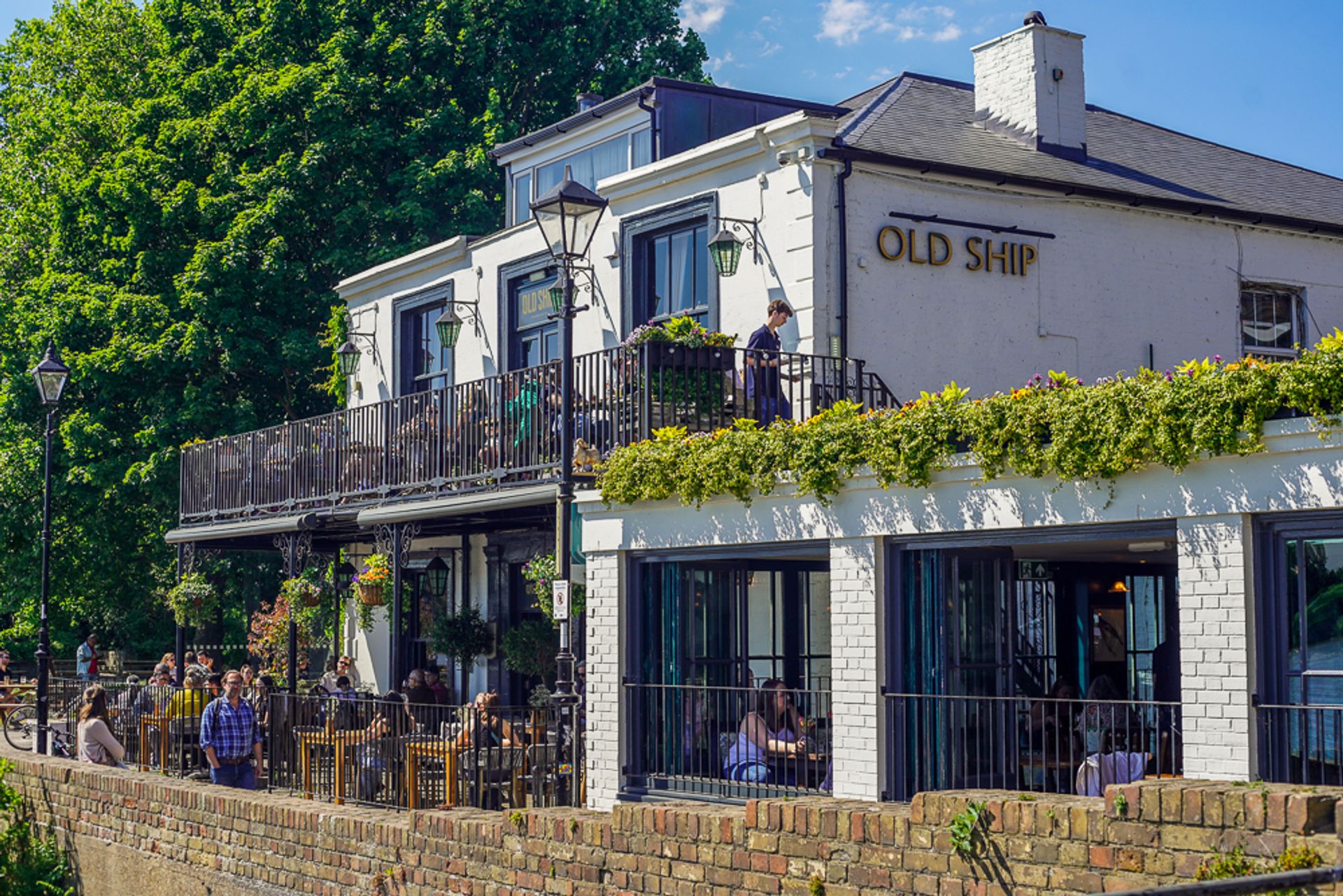
South of the roundabout, crosses the Thames on green ironwork towers with gothic pinnacles, closed to motor traffic since 2020. , a low pub on Upper Mall, has a front bar recorded as the smallest in the world. sits further along Lower Mall by the bridge, in a building dating from an 1870s rebuild.
Away from the roundabout, streets such as Aynhoe Road and Girdlers Road are lined with three storey red brick terraces, white stucco trim and bay windows. Godolphin and Latymer School's yellow brick buildings sit behind railings and mature trees on a similarly quiet street.
Shot in Hammersmith
No Time to Die staged Bond's meeting with M outside the Rutland Arms on Lower Mall, a couple of hundred metres from Hammersmith Bridge. The pub sits directly on the river path, with the bridge's green ironwork towers visible behind it.
No Time to Die, 2021
The Rutland Arms
James Bond meets M on the riverside path outside this pub, a short walk from Hammersmith Bridge's green ironwork towers. The scene was filmed here on 12 July 2019. Street View
What Hammersmith can double for
Marlow, Buckinghamshire
Marlow Bridge crosses the Thames a short way upstream, built in the 1830s by William Tierney Clark, the same engineer who designed Hammersmith Bridge's original 1827 span. Its twin suspension towers and green painted ironwork match the same style of Victorian river crossing. Only foot and local traffic can cross Marlow's bridge, under a weight limit, so wider shots need to keep modern cars queued at its own approach out of frame. The town behind it is lower and more rural than Hammersmith's riverside terraces. Try searching Victorian suspension bridge now.
Mancunian Way in Manchester, England
The Mancunian Way is an elevated motorway on concrete piers directly over city centre roundabouts, built in the 1960s, the same decade as Hammersmith's own flyover. Office and university buildings line the road beneath it in the same way blocks ring the Hammersmith gyratory. Manchester's spans run longer and straighter than Hammersmith's sixteen, so a tight shot under one pier reads closer than a wide establishing view. Its surrounding buildings are taller and more recent than the 1990s block at Hammersmith Broadway. Try searching elevated motorway over roundabout now.