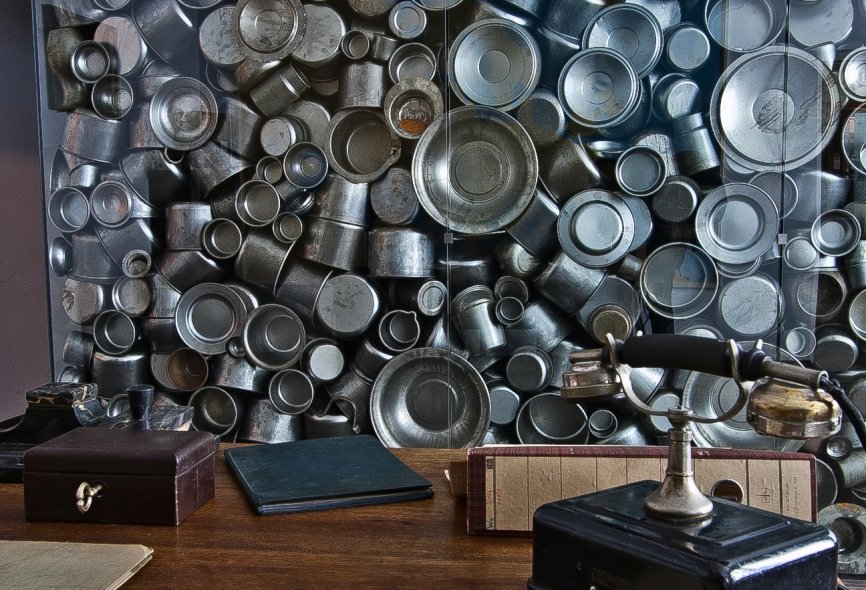
Former factory sheds and rail sidings on the south bank, and the real enamel works Schindler's List used as itself.
What Zabłocie looks like
Oskar Schindler's former enamel factory on Lipowa Street is a curved three storey stucco block with an arched gate at the street corner, its ground floor windows set in steel frames and glass block. City tour carts line up along the kerb outside the entrance, where a banner still advertises tours of the factory.
A two storey stuccoed villa on Romanowicza Street was the factory's former office. It stands behind a low wall, with brick chimneys along its roofline. Newer apartment blocks in brick and render rise on the cleared plots around it, some still ringed by grass and gravel where nothing has been built yet.
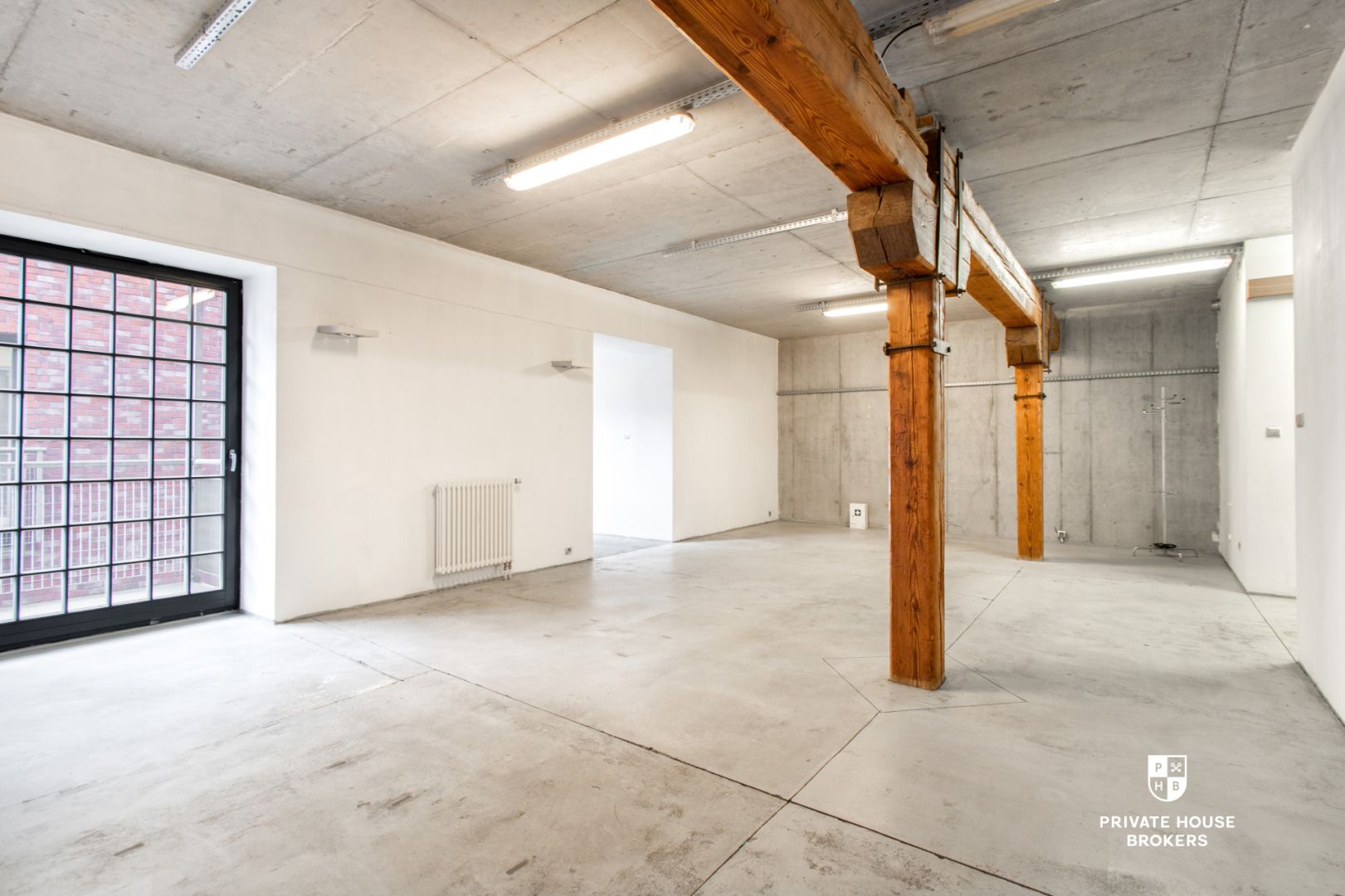
The Telpod works a few streets over is a seven storey concrete slab that runs almost the length of its block, its windows set in continuous horizontal bands. The former cosmetics plant nearby keeps its rooftop sign in cursive neon over a low white and blue facade. , a former factory shed close by, now holds a food hall under its original steel roof trusses.
The Galician railway line runs along the district's eastern edge, its tracks still in the ground. opens onto the line behind a louvered glass and steel front, a short walk from the factory gate.
Shot in Zabłocie
For Schindler's List, the production filmed exterior shots and the factory stair scenes at Oskar Schindler's actual enamel factory on Lipowa Street. Some factory interiors were filmed at a similar facility in Olkusz, outside Kraków.
Schindler's List, 1993
The production filmed the factory's exterior and its stairs here. The building is now the Historical Museum of Kraków's branch, and its entrance still opens onto the same street corner. Street View
Ancoats is a former cotton mill district being redeveloped for housing and offices around its brick multi storey mills, the same trajectory as Zabłocie's own factory conversions. The scale is close too, a compact grid of former industrial blocks close to the city centre rather than a sprawling estate. Ancoats' mills are five and six storeys, taller than Zabłocie's own two and three. A wide shot needs a lower building or a tighter frame to hold the match. Try searching brick mill conversion now.
Hackney Wick is the same shape of place, a former industrial pocket of warehouses and yards along a rail line and a waterway, now split between artist studios and new apartment blocks going up on the cleared plots. Zabłocie's mix of an old factory shed beside a glass fronted new build reads the same way on camera. Hackney Wick's canal towpath and narrowboats are a giveaway in any wide shot that includes the water. Try searching artist studios and warehouses now.