The canal is 1.8 miles long and the subway crosses it 87 feet up.
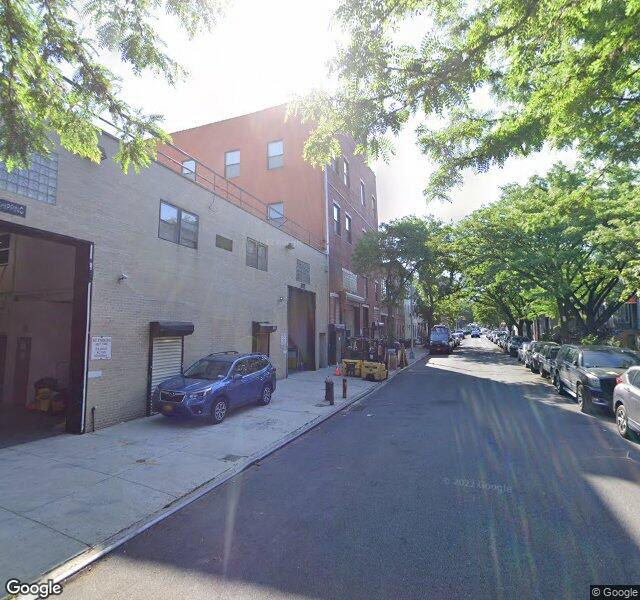
What Gowanus looks like
The is 1.8 miles long, and seven bridges and viaducts cross it between and the bay. The turns off to the east.
Dredging turned a tidal creek into the canal between 1849 and the 1860s. Lumber, coal and stone came off the barges, and coal gas was made beside it. The combined sewers still empty into it when it rains. It was listed as a Superfund site in 2010, and cleanup is still underway.
Along the banks most of the buildings are one to three stories, with lumber yards and metal shops among them. at 322 Third Avenue was the Brooklyn Rapid Transit company's power station, built between 1901 and 1904. It sat empty from 1972 and reopened as workshops in 2023.
The is the oldest of the four retractile bridges left in the country. The deck is timber and a sign on it still warns of a five dollar penalty for driving faster than a walk. It reopened on June 15, 2026 after five years of repairs. It is limited now to pedestrians, cyclists and emergency vehicles. It still opens for maritime traffic, including the cleanup barges.
F and G trains cross above all of this on the . stands 87.5 feet up, the highest in the subway. The platform looks out over the neighborhood.
A rezoning in November 2021 allowed 8,500 apartments here. The towers are going up along the water.
Shot in Gowanus
Goodfellas used a street corner under the Culver Viaduct for one of its final scenes. The corner is Smith Street at Ninth Street, alongside the canal.
Goodfellas, 1990
Smith Street at Ninth Street
Played a Brooklyn side street
Karen Hill meets Jimmy Conway on Smith Street at Ninth Street, under the elevated tracks with the station signs behind them. He gives her money and sends her across the road to a doorway where there are supposed to be dresses. She looks down the empty block, backs out and drives off.
The Flats line the Cuyahoga River with factories, warehouses and a tangle of bridges from the same industrial era as the Gowanus Canal. Scrap yards and low brick buildings still work the banks in places, close to Gowanus's own mix of lumber yards and metal shops. Cleveland's bridges are far larger lift and vertical lift structures than Carroll Street's small retractile span, and the river itself runs much wider than the canal. Try searching industrial river with bridges now.
Hackney Wick's brick industrial buildings went up along the Lea Navigation between 1880 and 1920, load bearing brick walls over cast iron columns, close to Gowanus's own low multi-storey sheds. Victorian warehouses still line the towpath on both banks. British road markings, postboxes and a different brick bond would need dressing out. The canal towpath here also reads narrower than the Gowanus banks. Try searching canal towpath brick warehouses now.
Bubbly Creek, the South Fork of the Chicago River through Bridgeport, is a narrow industrial channel with scrap yards and empty factories on its banks and three bridges crossing it. The scale is close to the Gowanus Canal's own Fourth Street Basin, though the creek itself is quieter and less built up. Only two streets reach the creek's edge, so wide shots run out of vantage points quickly. Chicago's own skyline sits close behind it. Try searching industrial creek scrap yards now.