Five blocks of cast iron fronted brick warehouses, and the street Gambler V used for its opening chase.
What The Strand looks like
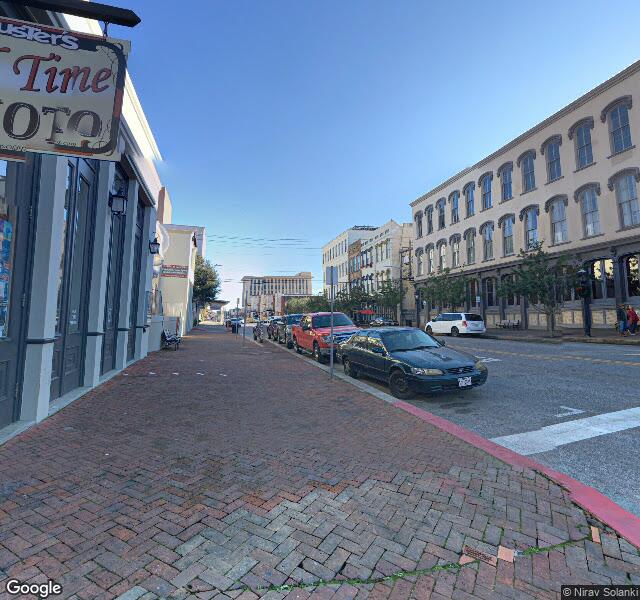
Red brick warehouses with cast iron columns and arched windows line both sides of the Strand for five blocks between 20th and 25th Streets, most of them two to four storeys over the old wharf. At the oldest end, is a matched pair of buildings from 1855 and 1859, their ground floor still behind a run of iron columns.
Further along, the rises three storeys over cast iron columns, built in 1872 with two more storeys of arched windows and ornamental ironwork above the ground floor. The continues the block four storeys up, its own cast iron facade cut with oval and quatrefoil openings under one cornice that spans the full width of the building.
On 22nd Street the keeps a three storey brick front from the early 1880s behind cast iron columns. The Stewart Building rises four storeys from the same years under a restored cornice. The stands at the corner of Strand and 22nd Street behind its own cast iron front. Saengerfest Park opens a paved square across from it, benches and a chessboard set into the ground.
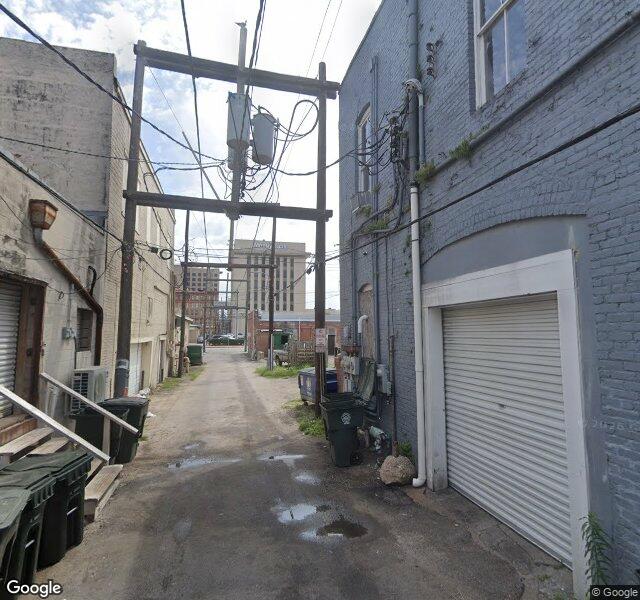
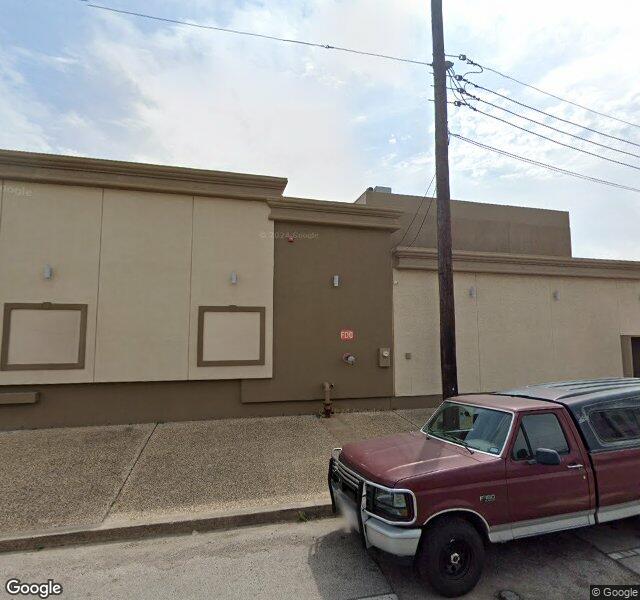
Loading doors and iron shutters still mark the service alleys behind the storefronts, the working side of buildings that face Strand with glass and ironwork. Most of the street dates from the 1870s and 1880s, and the facades have stayed largely intact through decades of restoration.
Shot in The Strand
For the CBS television movie Gambler V, the production drove cattle down the Strand and ran a chase scene along the real street. The History Channel documentary Isaac's Storm later filmed along the same block of storefronts for its account of the 1900 hurricane.
Gambler V: Playing for Keeps, 1994
The CBS television movie Gambler V drove cattle down this stretch of the Strand for its opening sequence, and the pickpocketing that follows turns into a chase along the same street. The scene runs on the real roadway and sidewalks, between the ironwork storefronts still standing today. Street View
Isaac's Storm, 2004
The Strand's storefronts
The History Channel documentary Isaac's Storm filmed along this stretch of storefronts for its account of the 1900 hurricane, which struck these same buildings. The iron columns and arched window bays on screen are the same ones that front the street today. Street View
SoHo's cast iron fronted warehouses carry the same oval and quatrefoil cutouts and full width cornices as the Strand's own Greenleve-Block Building, and most of them went up in the same 1860s to 1880s window. Greene Street has the densest run of unbroken cast iron facades. SoHo's cobblestone paving and taller five and six storey blocks read differently in a wide shot, so tighter frames on the cast iron fronted warehouses hold the match best. Try searching cast iron fronted warehouses now.
Red brick warehouses with loading docks and arched window bays along Tchoupitoulas Street match the Strand's own cotton era scale, built in the same 1870s to 1890s span. Both grew up around a working wharf rather than a planned square. New Orleans buildings run taller with more elaborate corbelling in wider shots, so a street level frame on the red brick warehouses holds the comparison better than a rooftop view. Try searching red brick warehouses now.
River Street in Savannah, Georgia
The brick cotton warehouses above River Street share the Strand's scale and era, most built between the 1850s and the 1880s for the same wharf side trade. Their bluff top entrances and the iron bridges of Factors Walk give Savannah its own distinct silhouette. Keep Factors Walk's iron bridges and the cobblestone slope out of frame, since the brick cotton warehouses have no equivalent on the flat, paved Strand. Try searching brick cotton warehouses now.