Brick shopfronts, a street market and a railway viaduct sit close together on Kingsland High Street.
What Dalston looks like
runs through the middle of the area, three and four storey shopfronts with flats above, some fronts painted over the original brick. runs in stalls just off the high street, opposite the overground station. Traders sell fruit, vegetables and clothing under a mix of canvas and metal awnings. Halal butchers cluster near the high street end of the market, their windows stacked with trays of meat.
A brick railway viaduct crosses the area on its way from Shoreditch, with the London Overground running along arches behind the shops. The nearby station sits under its own canopy of silver cladding, a newer addition among the older brick stock around it.
keeps older industrial buildings behind the market, plain brick warehouse fronts with loading doors and the Hackney Peace Carnival Mural running the length of one long wall. opens out behind it, a paved yard lined with low shopfronts and outdoor tables.
The 's sweeping Art Deco curves and neon sign over the entrance date from a 1930s refit. St Mark's church on St Mark's Rise stands back from the road behind iron railings, its brick dating from the 1860s and matching the terraces nearby.
Shot in Dalston
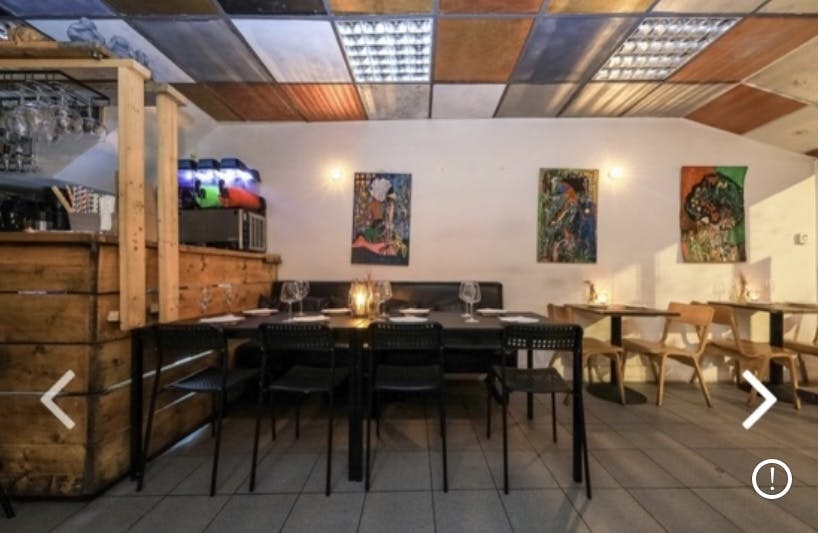
Dirty Pretty Things used the flat above 98 Kingsland High Street overlooking Ridley Road market as Okwe and Senay's home. Naked used a house at St Mark's Rise and Downs Park Road for Johnny's flat. Run Fatboy Run shot Dennis's flat at 73 Sandringham Road across from St Mark's Church. Boiling Point was filmed inside the working kitchen of Jones & Sons on Gillett Street in a single continuous take, before the restaurant closed at the end of 2025.
Dirty Pretty Things, 2002
98 Kingsland High Street
Okwe and Senay's flat overlooks Ridley Road market from this address, one of the ordinary shopfronts with flats above that run along this stretch of the high street. Dalston Kingsland station, the nearest rail stop for the flat, is a short walk up the same road.
What Dalston can double for
Chapel Market in Islington, London
Chapel Market's permanent stalls sit beside two and three storey Victorian shopfronts of a similar height and brick, close enough in scale to Kingsland High Street's own market frontage. Both run their stalls down the middle of a narrow street rather than off to one side. Chapel Market has no railway viaduct overhead, so a wide shot loses the elevated line that runs behind Dalston's shops. Try searching narrow market street stalls now.
Deptford High Street in London, England
Deptford High Street has a similar run of Victorian shopfronts under two and three storeys of flats, with its own weekly market spreading stalls onto the pavement. The Docklands Light Railway crosses on a viaduct at the Deptford Bridge end, giving it the same elevated line at street level that Dalston has. Deptford's viaduct is concrete rather than brick, so a close shot of the arches themselves would need to avoid showing the difference. Try searching market stalls under a viaduct now.
Digbeth keeps its own mix of brick warehouses and market halls, with railway arches running through the area much as Dalston's viaduct does. It is more industrial than residential though, which suits Dalston's warehouse streets better than its market frontage. Digbeth's arches are wider and its streets broader, so a tight frame on one arch or shopfront works better than a long establishing shot. Try searching brick warehouses and railway arches now.